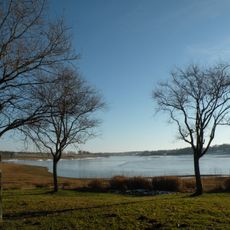
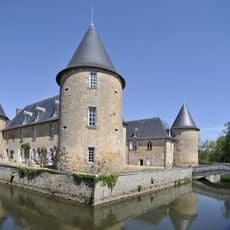
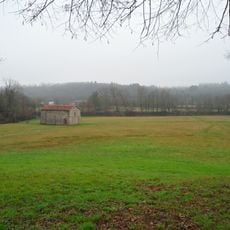
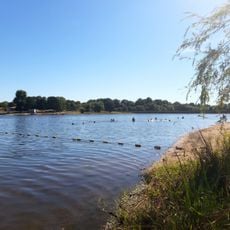
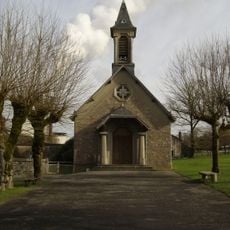
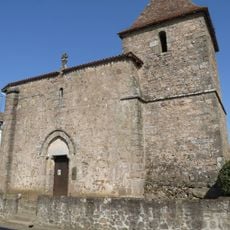
Rochechouart crater, Impact structure in Haute-Vienne, France.
Rochechouart is an impact structure in southwestern France whose original crater, about 20 km across, has been erased by erosion. What remains is a central sub-circular zone roughly 12 km wide exposing breccias and impact melt rocks, surrounded by a diffuse annular zone about 25 km wide with breccia dykes and intense fracturing in the gneiss and granite bedrock.
The impact occurred 206.9 ± 0.3 million years ago, about 5.6 million years before the Triassic–Jurassic boundary. In 1969, geologist François Kraut formally established the crater's impact origin, ending a debate that began with the first description of the local breccias in the late 18th century. In the mid-1970s, P. Lambert detected a projectile signal in the rocks, confirming the impact.
The crater's geology today draws researchers and students who come to study its unusual rock formations and impact features. Local institutions help visitors understand what happened here millions of years ago through displays and explanations.
The area is best explored on designated paths, with guided tours available from the nearby town of Rochechouart. Wearing comfortable shoes is advisable since the terrain is uneven and the weather can change quickly.
The extreme heat from the impact transformed local stone into glass-like cores and other rare minerals still visible today. This transformation reveals the unimaginable force of the original collision.
The community of curious travelers
AroundUs brings together thousands of curated places, local tips, and hidden gems, enriched daily by 93,847 contributors worldwide.