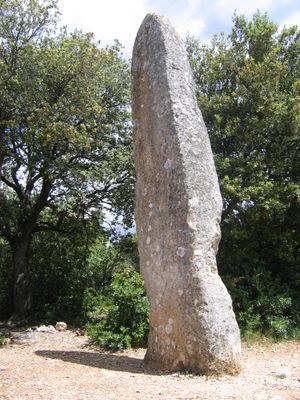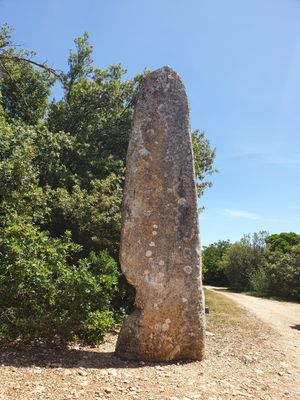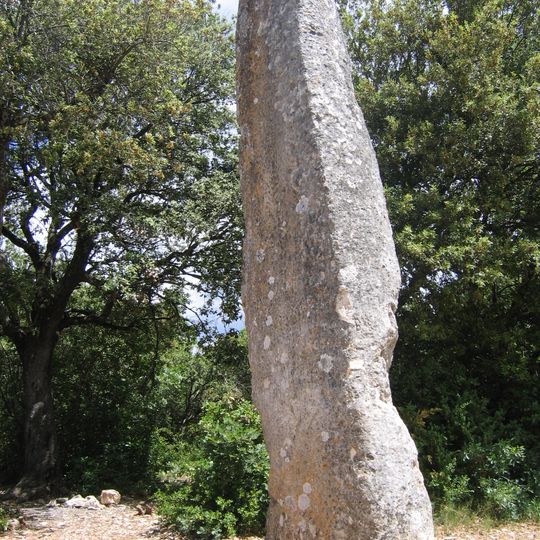
La Lèque menhir, Neolithic standing stone in Lussan, France.
La Lèque is a standing stone that rises approximately 5.6 meters (18 feet) high, with a base measuring roughly 1.6 meters (5 feet) wide and 0.6 meters (2 feet) thick. Evidence of deliberate shaping appears on the east and west faces, indicating the stone was worked rather than simply erected.
The stone originates from the Chalcolithic period, dating between 2300 and 1800 BCE, a transition phase from the Neolithic era into the Bronze Age. It stands as evidence of how people during this time marked their landscape through monumental construction.
The stone displays circular patterns when light strikes it at certain angles, showing that its makers invested deliberate effort in shaping it. This distinguishes it from many rough, unworked stones found elsewhere in the region.
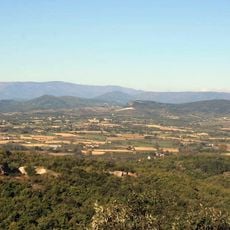
The menhir is accessible via a marked hiking trail that forms a loop beginning from the Le Lèque hamlet, covering roughly 10 kilometers of walking distance. Visitors should wear sturdy footwear and allow sufficient time, as the route passes through rural countryside terrain.
The stone tapers from its wider base toward a narrower top, a shape that differs from many other regional standing stones that maintain uniform block forms. This distinctive proportioning sets it apart as a special construction among local megaliths.
The community of curious travelers
AroundUs brings together thousands of curated places, local tips, and hidden gems, enriched daily by 60,000 contributors worldwide.