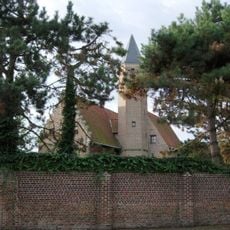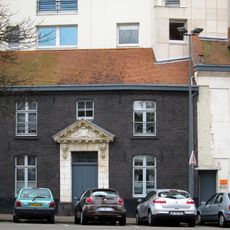
Abbaye de Notre Dame de Loos, Cistercian abbey in Loos, France.
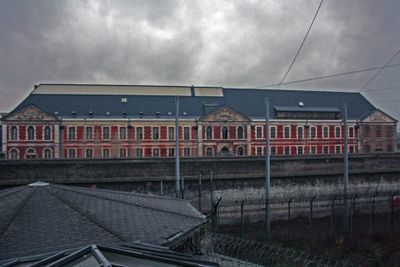
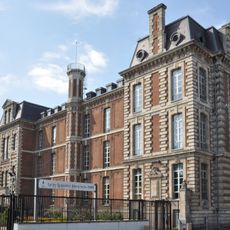
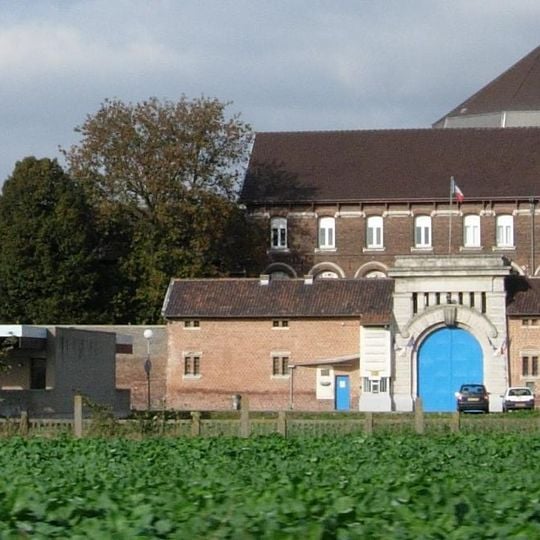
Abbaye de Notre-Dame de Loos is a former Cistercian abbey in Loos, near Lille, built in its present form in 1752 as a brick-and-stone complex. The long main building has a dark grey pitched roof, red brick walls with lighter stone trim, a central projecting section topped by a triangular pediment with carved decoration, and rows of tall arched windows above smaller rectangular ones. A lower two-storey brick wing and a large arched gateway with blue double doors in a pale stone surround stand to the side.
The abbey was founded in 1149 by Thierry d'Alsace and Sibylle d'Anjou as a center of Cistercian monastic life. The French Revolution in 1789 transformed it into state property, ending centuries of religious use.
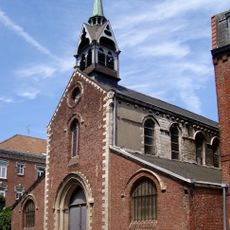
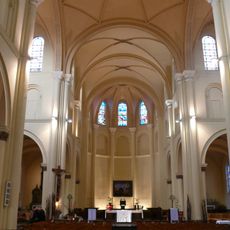
The abbey church, Notre-Dame-de-Grâce, was finished and blessed in 1591, enlarged and consecrated by bishop Michel d'Esne in 1611; the archdukes Albert and Isabella came here on pilgrimage after their solemn entry into Lille. The abbot also governed six women's houses, among them the abbey of Flines, and was perpetual provisor of the hospice Comtesse. The chapel was demolished after 1962 to make room for a sports ground.
The former abbey is not open to visitors: the prison closed in August 2011 and the buildings have since been damaged by cable theft and vandalism. The 18th-century abbey buildings, with listed roofs, pediments and facades, are to be restored as a preparation centre for prisoners nearing release. View the complex from the street only.
The site became home to one of France's first penitentiary research services in 1927, pioneering scientific approaches to prisoner rehabilitation. This innovation showed how the institution adapted to changing social needs.
The community of curious travelers
AroundUs brings together thousands of curated places, local tips, and hidden gems, enriched daily by 93,854 contributors worldwide.