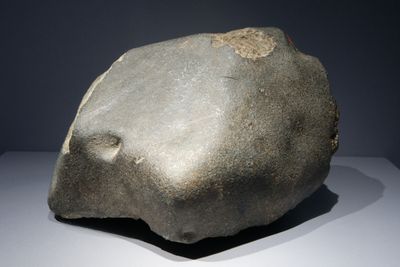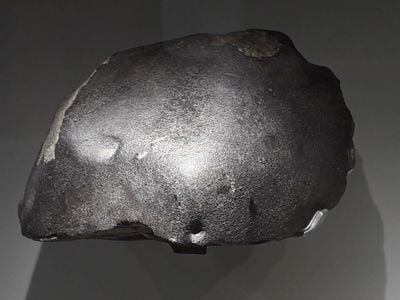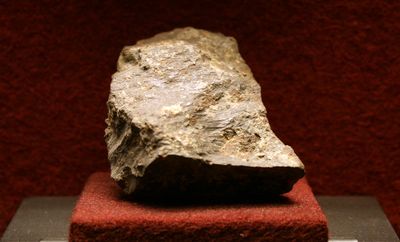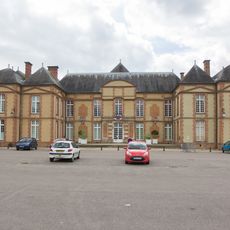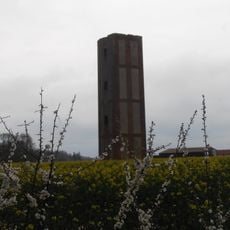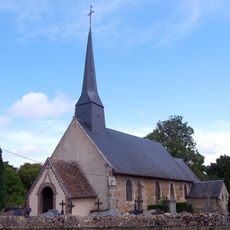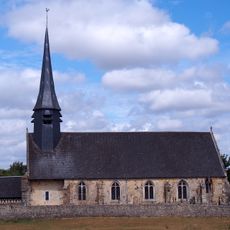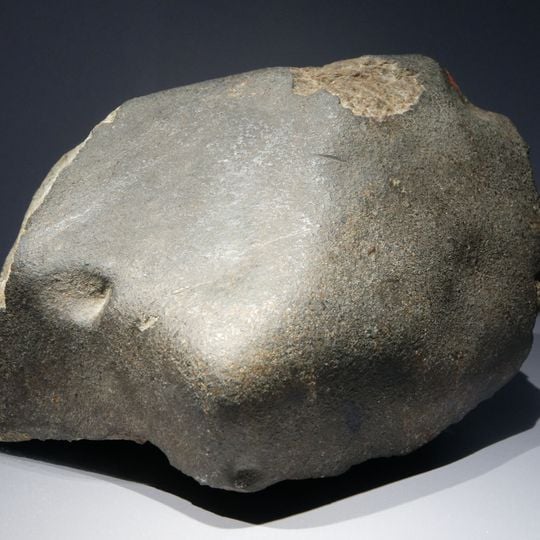
L'Aigle, Stone meteorite in Lower Normandy, France.
L'Aigle is a meteorite fall in Normandy, France, where thousands of stone fragments landed across a defined area south of the town of L'Aigle in April 1803. The pieces range widely in size, from small chips to chunks of several kilograms, and were collected shortly after the event.
Jean-Baptiste Biot traveled to the site on behalf of the French Academy of Sciences and carried out the first organized scientific study of a meteorite event, combining witness interviews with debris mapping. His report became a reference for how such events would be studied from that point on.
The fall ended a long debate about whether rocks could actually fall from space, and the event is still cited as a turning point in how science treats eyewitness accounts. Today the fragments on display in museums give visitors a direct connection to that moment.
Most fragments are held at the National Museum of Natural History in Paris, though some pieces can be found in other French museum collections. Checking in advance which specimens are on display will save time, as not everything is shown permanently.
More than 3,000 individual fragments were recovered after the fall, making it one of the best-documented meteorite events of its time in terms of physical evidence. Biot's map of the debris field also showed that heavier pieces landed farther from the center, an observation that helped explain how such falls scatter.
The community of curious travelers
AroundUs brings together thousands of curated places, local tips, and hidden gems, enriched daily by 91,506 contributors worldwide.