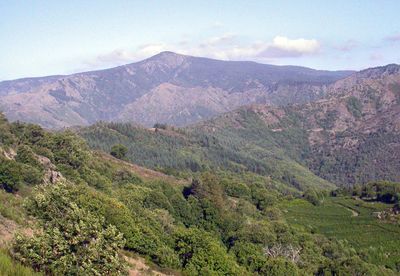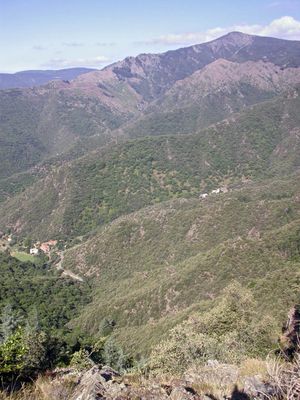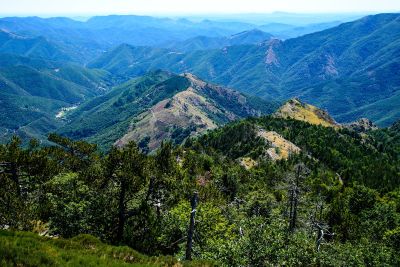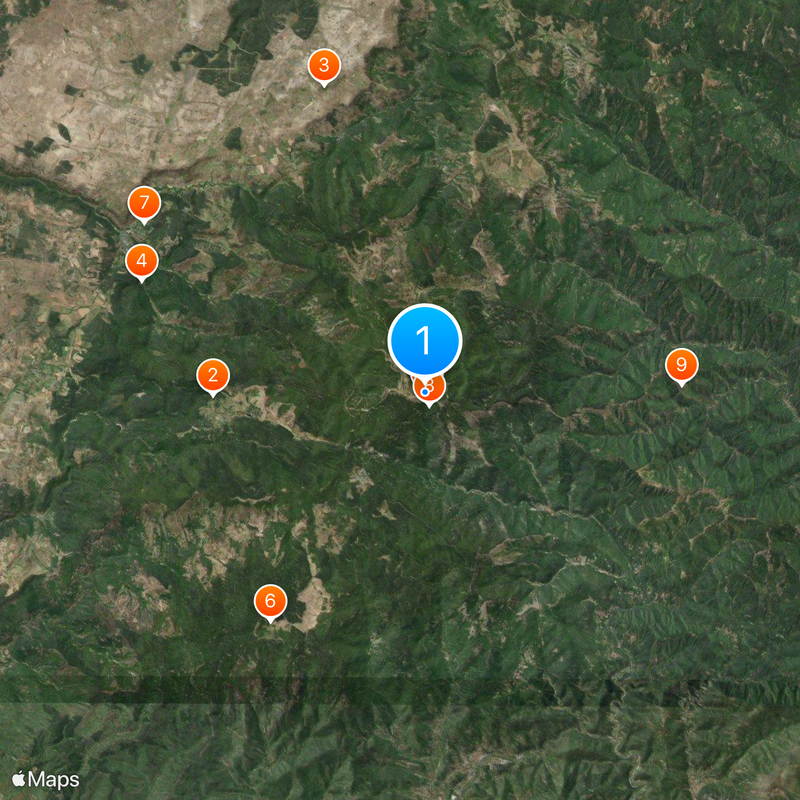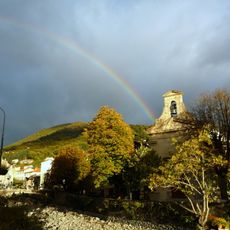
Mont Aigoual, Mountain summit in Gard, France
Mont Aigoual is a granite and schist summit on the border of Gard and Lozère, reaching 1,565 m at the Signal de l'Hort de Dieu, the highest point of Gard. Its summit plateau above 1,500 m spans about 3 km² and holds three peaks: Pic de la Fageolle (1,555 m), the Signal de l'Hort de Dieu (1,565 m) with the meteorological observatory, and the Portalet (1,565 m) in Lozère. The summit tower's orientation table stands at 1,571 m.
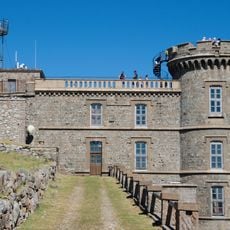
The summit's first weather station was set up in 1887 by the French Rivers Authority and Forestry Commission under Georges Fabre, and the observatory building dates from 1894. It is the last French weather station still inhabited by meteorologists, who run a summer exhibition on forecasting. The summit also entered cycling history: first crossed in the 1987 Tour de France by Silvano Contini and a summit finish in 2020, won by Alexey Lutsenko.
The name Aigoual comes from a Germanic personal name, Algoald or Aigoald, recorded as mons Aigoaldi in 1249; in Occitan the mountain is Augal. The summit is also linked to the Camisards and to the maquis, and it inspired Cévenol writers such as André Chamson, Jean-Pierre Chabrol and Jean Carrière.
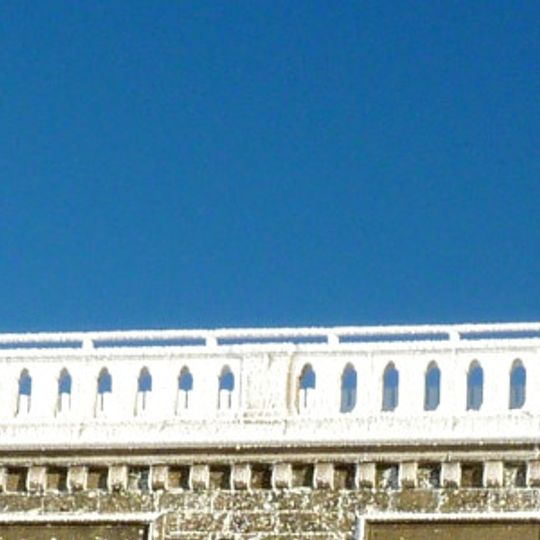
The summit is reached by surfaced roads converging from several valleys, including the 28 km climb via the col de la Sereyrède and the col de Prat-Peyrot, where a ski station sits at 1,380 m. The summit plateau lies above 1,500 m, and the orientation table stands on the crenellated tower at 1,571 m. Weather changes abruptly, so carry protection even in summer.
The mountain receives about 2250 millimeters of rain annually, making it France's wettest location. This happens because weather systems from the Atlantic and Mediterranean meet here, causing moist air to rise and release its water.
The community of curious travelers
AroundUs brings together thousands of curated places, local tips, and hidden gems, enriched daily by 93,784 contributors worldwide.