Grottes de Cougnac, Prehistoric cave in Payrignac, France
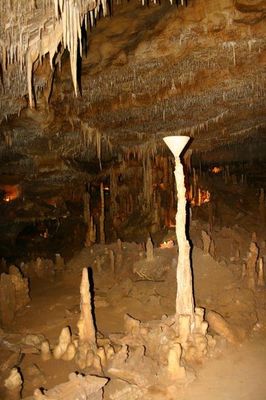
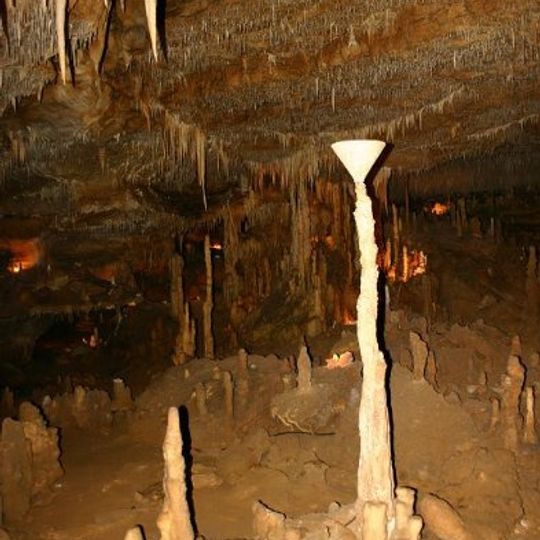
Grottes de Cougnac consists of two caves about 200 metres apart in Payrignac, near Gourdon. The first is a dry cave with many concretions, some as thin as soda straws; the second is the decorated cave. In the first cave, a slender pale column topped by a white conical lamp stands among shorter stalagmites, with brownish stalactites hanging above.
The two caves were found after a drought: the first in 1949, the painted one in 1952, by Lucien Gouloumes, René Borne, Jean Mazet, the Boudet brothers and Alphonse Sauvant. The painted cave was classified as a monument historique in 1954. Charcoal samples gave two phases, animal figures around 25,000 years ago (Gravettien) and dots around 14,000 years ago (Magdalénien).
The decorated cave holds about fifty figures: aurochs, a horse, a bison, megaceros deer, ibex and mammoths, plus three schematic humans pierced by spear shafts, one 46 cm tall with a bird-like head. Michel Lorblanchet described them. The walls were repeatedly touched and painted over more than 5,000 years, suggesting the rock was believed to hold supernatural powers.
Visitors can join guided tours lasting about two hours that lead through both cave sections and make the site easy to explore. Onsite facilities include a shop, parking, and educational displays to enhance the visit.
The decorated cave was found in 1952 under murky circumstances using a dowsing rod, according to the Dutch Wikipedia. It lies about 200 metres from the first cave, which is dry and holds very thin fistulous concretions. Both caves have been open to the public since their discovery, and around 25,000 people visit each year.
The community of curious travelers
AroundUs brings together thousands of curated places, local tips, and hidden gems, enriched daily by 94,572 contributors worldwide.