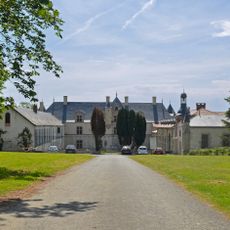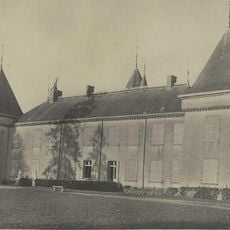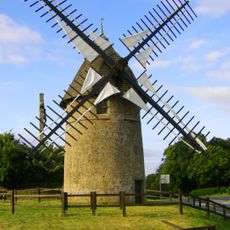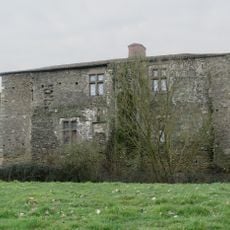
Château du Parc-Soubise, Renaissance castle in Mouchamps, France.
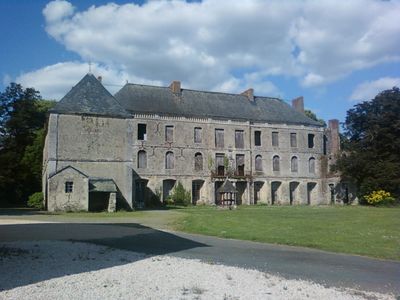
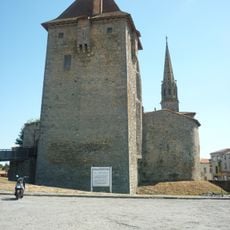
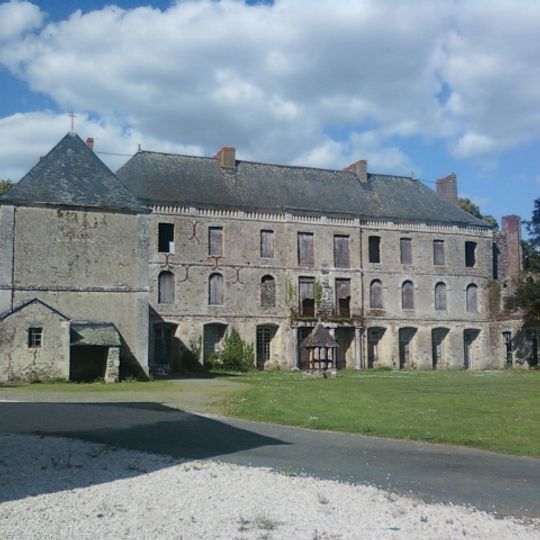
Château du Parc-Soubise is an 18th-century stone building in Mouchamps, Vendée, built by Pierre Bonfils on part of the foundations of the dismantled fortress. Its long grey facade has three rows of windows, tall and arched above, mostly rectangular below, under a steep slate roof; a square pavilion with a pyramidal roof projects at the left end, and a small gabled stone annex sits at its base.
The castle was the main residence of the Parthenay-L'Archevêque family after the 1247 marriage of Valence de Lusignan and Guillaume de Parthenay. In the 16th century Michèle de Parthenay made it a Protestant stronghold. It passed to the Rohan family in 1575, was dismantled under Richelieu, sold and razed in 1771, then rebuilt by Pierre Bonfils. Charles-Augustin de Chabot bought it on 24 December 1784 and completed the construction.
Catherine de Parthenay, who received the estate in 1575 through her second marriage to the Protestant René de Rohan, held a court there. Her cousin Henri de Navarre, the future Henri IV, visited often, as did the mathematician François Viète, founder of the new algebra, and the writer Agrippa d'Aubigné.
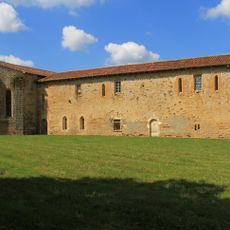
The château stands in the Vendée bocage at Mouchamps, near Les Herbiers and the Puy du Fou. Its outbuildings have been converted into gîtes and rooms, and a theatre festival is held there every two years in August. The 18th-century house is a private property, so visits depend on the owners' arrangements.
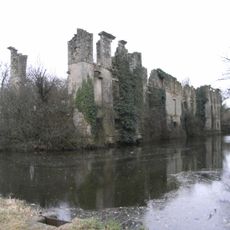
On 31 January 1794 the colonne infernale of Lachenay, having just spared the inhabitants of Le Boupère, massacred 200 women, children and old people in the castle courtyard and set the building on fire. The count of Chabot, back from exile, chose to keep the château as it was in memory of these events; only the roof has been repaired since, protecting the ruins.
The community of curious travelers
AroundUs brings together thousands of curated places, local tips, and hidden gems, enriched daily by 94,512 contributors worldwide.