Cassan Abbey, Augustinian priory and château in Roujan, France
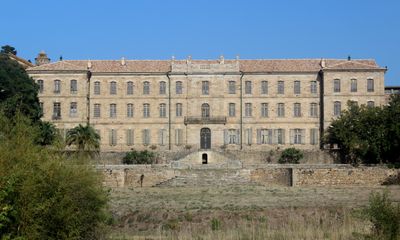
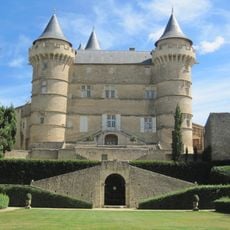
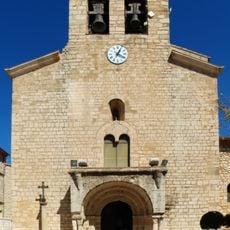
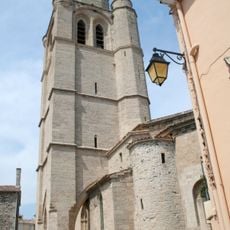
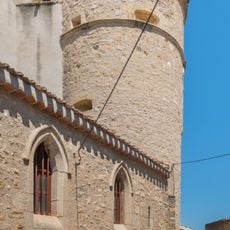
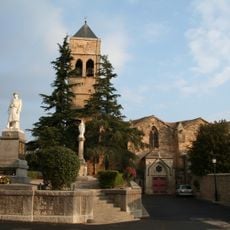
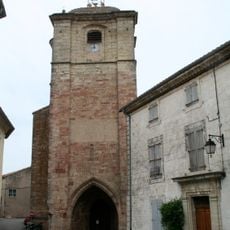
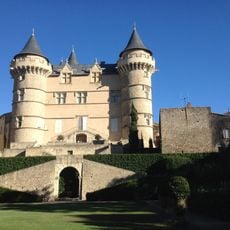
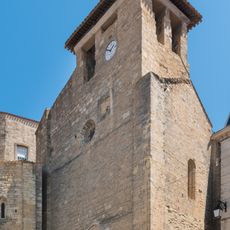
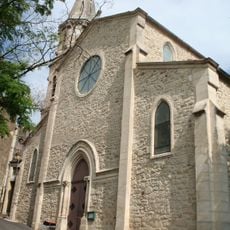
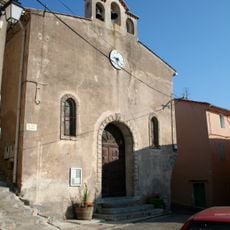
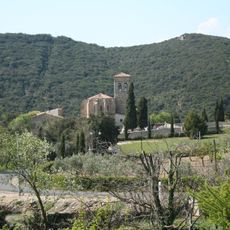
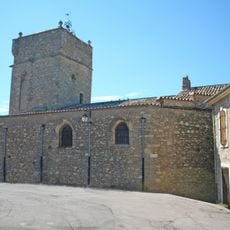
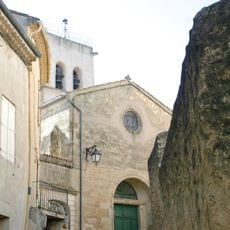
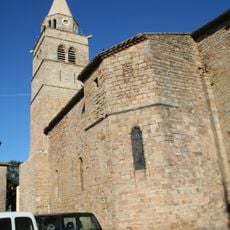
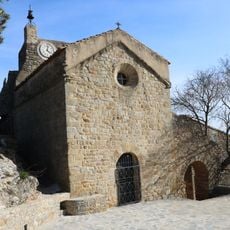
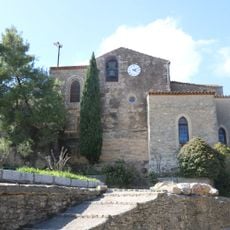
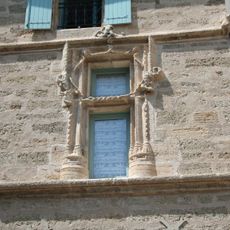
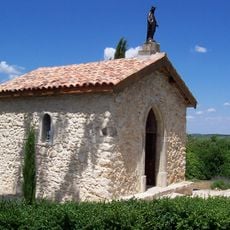
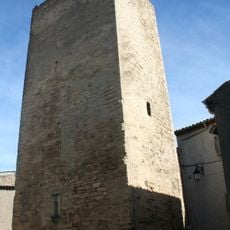
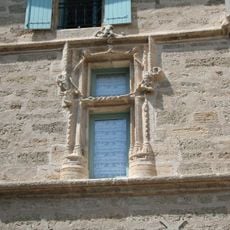
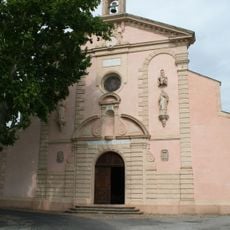
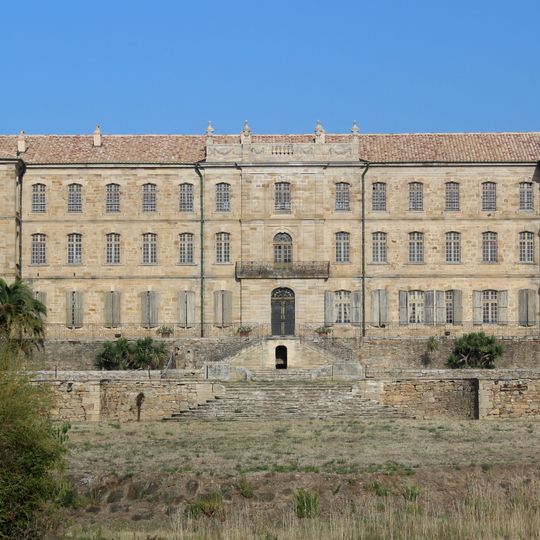
Cassan Abbey in Roujan consists of a 12th-century Romanesque priory church, the only surviving part of the medieval monastery, and an 18th-century conventual palace rebuilt under prior Pas de Beaulieu. The long pale-tan stone building has three storeys, a low tiled roof and three slightly projecting bays; the central bay rises into a carved gable with stone finials. Tall grilled windows line the upper floors, and a broad stone staircase with a central arched doorway leads up from a lower terrace.
The abbey was founded in 1080 by the Alquier family of Béziers on their donated land. In the 13th century, Pope Innocent III granted it independence from the local bishops.
The priory held one of the four Holy Shrouds of Christ known in the West, along with relics of the Holy Sepulchre, the Crown of Thorns and Saint Martha. These relics drew donations from across the region, and the church became the burial place of the nobility of Béziers. The name Cassan comes from the château label adopted after 1791.
The building and its surroundings are open to visitors and host cultural events such as art exhibitions; in July 2011 the photographic exhibition Strange Surfaces: Metal by Amanda Bouchenoire was shown here. The church, the west wing called Le Château and the south wing up to the dovecote were listed in 1953, and the facades, roofs, ironwork, cloister courtyard, grand staircase, former refectory and terraces in 1998.
At its peak, the abbey controlled land across roughly 75 villages, showing how much power it held in the medieval region. This vast territory made it one of the most influential religious institutions of its time.
The community of curious travelers
AroundUs brings together thousands of curated places, local tips, and hidden gems, enriched daily by 94,022 contributors worldwide.