Allée couverte de la Pointe-de-Guéritte, Neolithic burial site in Quiberon, France
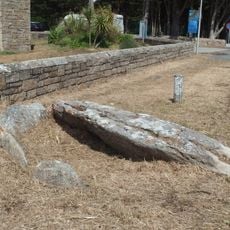
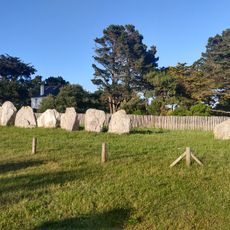
The allée couverte de la Pointe-de-Guéritte is a gallery grave about 7.50 m long and 0.80 m wide, oriented southeast to northwest. Its two longitudinal walls are built of dry stone and the whole is covered by six capstones. A flat, lichen-covered slab lies in the grass in front of the monument.
The grave dates to the Neolithic period and was originally used for communal burials. Archaeological work between 1892 and 1931 uncovered pottery and tools from the Bell Beaker period.
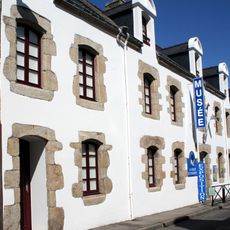
The Bell Beaker pottery found here, decorated with incised patterns, links the tomb to a wider Atlantic network of the late Neolithic. The flint arrowhead with tang and barbs, the two blades, twenty-two flakes, quartzite hammerstones and two primitive querns are kept at the Musée de Préhistoire de Carnac, not on site.
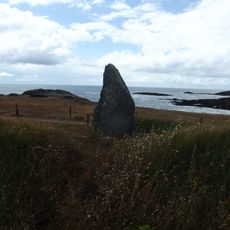
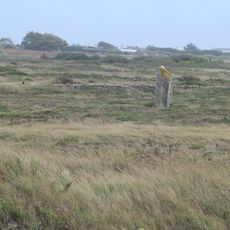
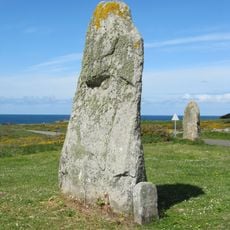
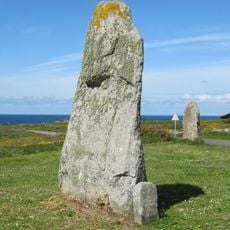
The allée couverte lies 50 metres south of the Pointe-de-Guéritte menhir, which serves as the reference point for finding it. The monument is oriented south-east/north-west and measures about 7.50 m long by 0.80 m wide, so it is a low structure partly overgrown by tall grasses.
The 1892 dig by G. de Closmadeuc and M. de La Grange yielded a flint arrowhead with a tang and barbs plus pottery sherds; Z. le Rouzic later recovered two blades, twenty-two flint flakes, quartzite hammerstones, two primitive querns and decorated Bell Beaker sherds. This material is kept at the Musée de Préhistoire in Carnac.
The community of curious travelers
AroundUs brings together thousands of curated places, local tips, and hidden gems, enriched daily by 93,601 contributors worldwide.