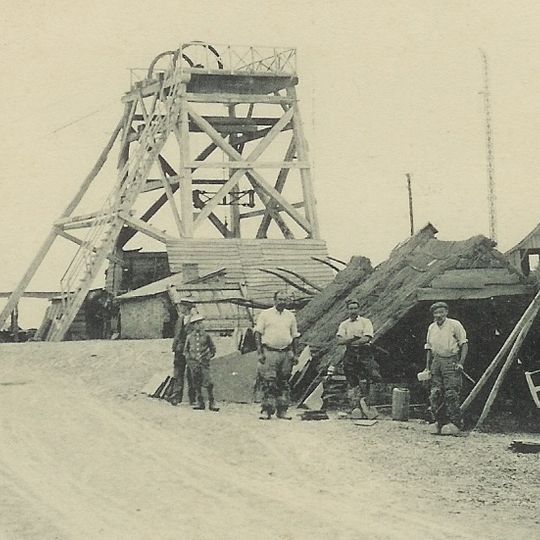
Ardoisières de La Pouëze, mine in France
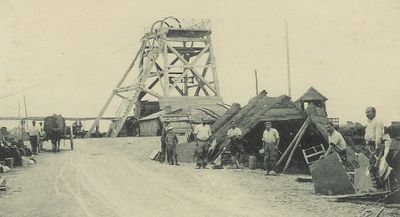
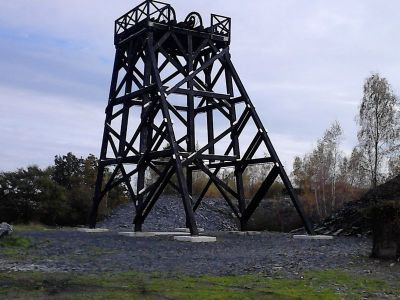
The Ardoisières de La Pouëze are former slate quarries in Erdre-en-Anjou, in the Armorican Massif. The site preserves a tall wooden headframe on a pale masonry base, with a railed platform and a large wheel at the top, and a second, dark steel headframe with two wheels side by side. The quarries were worked from the 15th century until the 20th century.
Small open-air workings existed west of the commune by the 15th century. In 1797 the Chesneaux, Gasnier and Bellanger families moved from Saint-Quentin-les-Anges to continue quarrying here. Between 1832 and 1885 about a hundred men produced 5 to 7 million slates, and from 1891 the commission des ardoisières d'Angers controlled all the workings.
Breton slate-splitters arrived in 1895, joining local families such as the Chesneaux, Gasnier and Bellanger who had come from Saint-Quentin-les-Anges in 1797. The influx added some 400 inhabitants to the parish and changed local life. The quarries lay close to the bourg, and the Fiogée and Bouet works drew up to 200 workers.
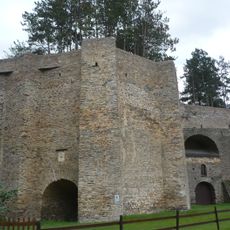
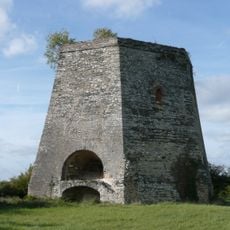
The quarries lie near the village of La Pouëze, in the commune of Erdre-en-Anjou, along the road to Brain; the Carterie buildings once bordered this road for more than 400 metres. The sites are former open-air and underground workings, so the ground is uneven and partly overgrown. Several quarries stood close together around the village, including Clos-Colas, l'Espérance, la Fiogée and la Carterie.
The Espérance quarry was sold on 3 July 1865 to a carpenter, Léon Livenais, and seven quarry workers, six of them living in La Pouëze. The sale covered 71 ares 30 centiares of the Clos-Colas field, the régisseur's office, stables, steam engines and unsold stock.
The community of curious travelers
AroundUs brings together thousands of curated places, local tips, and hidden gems, enriched daily by 95,295 contributors worldwide.