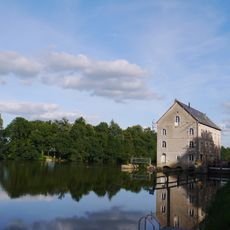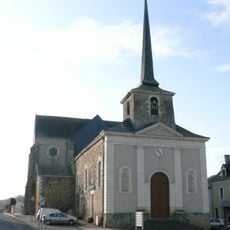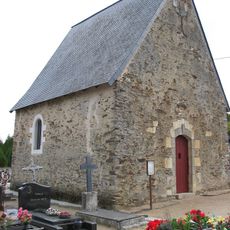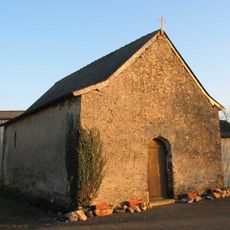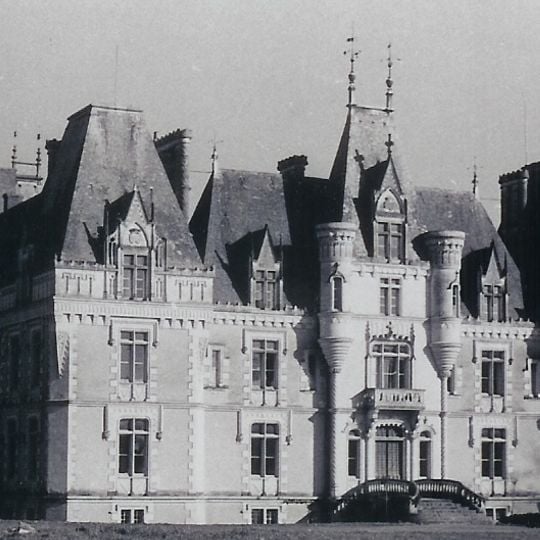
Château de la Beuvrière, Heritage-listed château in Grez-Neuville, France.
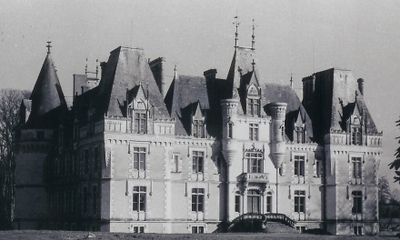
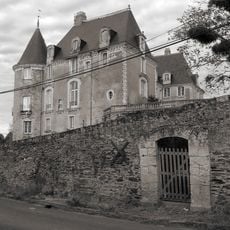
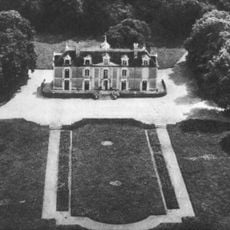
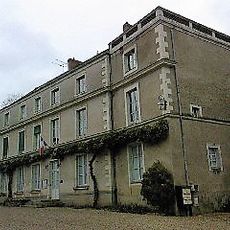
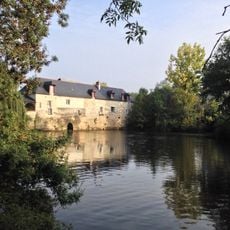
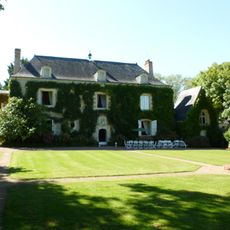
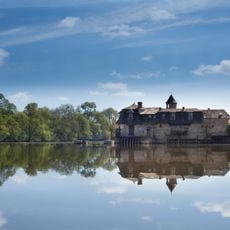
Château de la Beuvrière is a 19th-century castle in Grez-Neuville, Maine-et-Loire, built around 1867 on the site of an earlier castle demolished in 1864. Its light grey stone facade is framed by two pavilions and flanked by two corner turrets with conical roofs; a balustraded stone staircase leads to the central door beneath a carved balcony. Tall slate roofs carry dormers with triangular gables and pinnacles, and the west wing, added from 1893 by architect Dainville, ends in a round tower with machicolations. The building stands beside a pond within a park.
The seigneurie of La Beuvrière is documented from 1384, when Jean Valleaux is named as its earliest attested lord. The same family held it for four centuries through alliances, passing by marriage to the d'Orvault, Hullin de la Selle and de Terves families; the de Terves owned it from 1765 until Paul Dognin bought it in 1909. The old château was demolished in 1864 and the present one built around 1867 to plans by Chesneau, whose west wing and round tower were completed by Dainville from 1893. From 1927 the estate was broken up and its dependent farms sold.
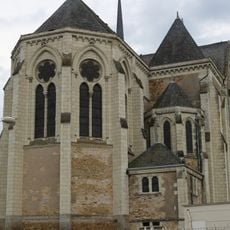
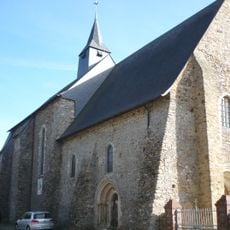
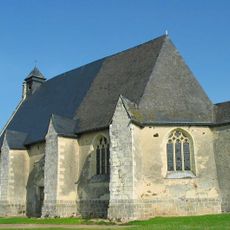
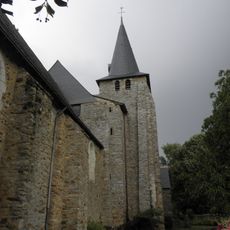
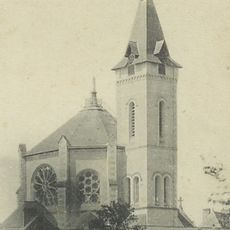
The name Beuvrière survives in the estate's dependent farms, sold off in 1927: Basse-Beuvrière, Haute-Beuvrière, la Talonnière, le Vau, le Souchet, la Roberderie and le Petit-Feudonnay. A chapel founded around 1500 by René Valleaux was replaced by one blessed in 1893. The same family held the land for four centuries, changing name through alliances: d'Orvault, Hullin de la Selle, then de Terves.
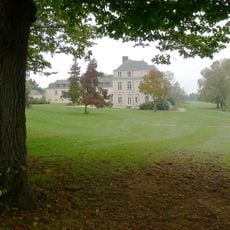
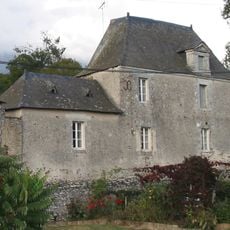
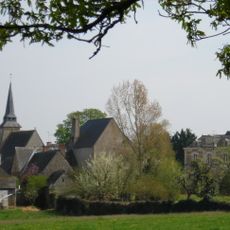
The château stands at the edge of a pond within a rural estate in Grez-Neuville. The site is reached by road from the village centre; the grounds are flat and grassy around the building. The farm buildings of the estate, built after 1861, are separate from the château.
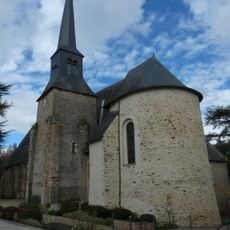
The crenellated round tower is an unusual feature that gives the building a fortress-like silhouette, even though it was added only in the 1890s. This late addition shows how medieval elements were deliberately incorporated into a modern project.
The community of curious travelers
AroundUs brings together thousands of curated places, local tips, and hidden gems, enriched daily by 92,637 contributors worldwide.