Café de Buci, Café in the 6th arrondissement of Paris, France
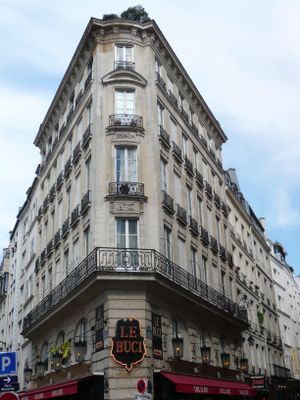
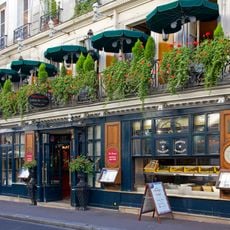
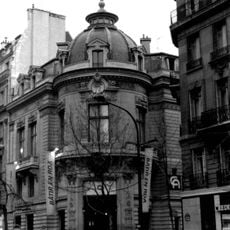
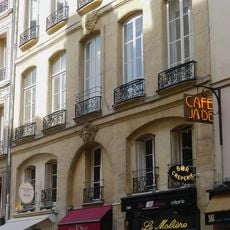
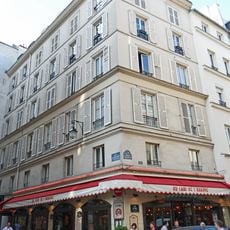
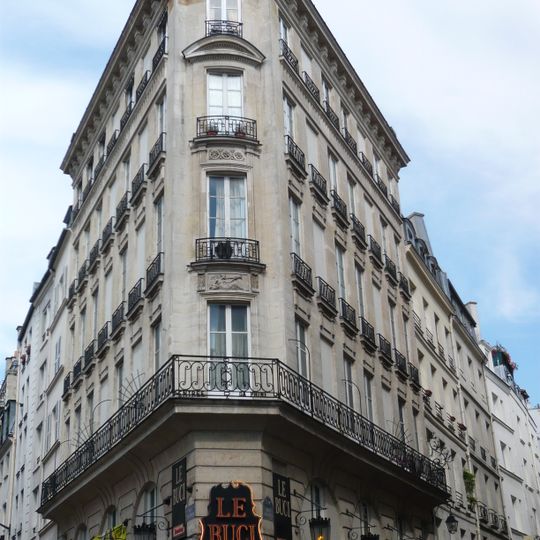
Café de Buci stands at the corner of Rue de Buci, Rue Mazarine and Rue Dauphine in the 6th arrondissement. Its ground floor has a dark glazed frontage wrapping the corner, with an orange-red outlined sign reading "LE BUCI" and two smaller vertical signs. Above, a continuous balcony with black wrought-iron railing runs around the corner, and the pale stone facade rises with tall windows, each framed by a shallow black metal balcony. The building's facades have been listed as monuments historiques since 19 September 1928.
The café was established in the early 19th century and its facade was officially protected as a historic monument in 1928. During the political upheavals of the 19th century, particularly after the coup of 1851, the establishment served as a refuge for those fleeing persecution.
The café served as a gathering place for artists, writers, and local residents who came together to exchange ideas and discuss their work. Its tradition reflects the spirit of Parisian intellectual life, where people from different walks of life could meet and share their passions.
The café sits at the corner of Rue de Buci, Rue Mazarine and Rue Dauphine, on Place Louise-Catherine-Breslau-et-Madeleine-Zillhardt. The nearest metro stop is Odéon, served by lines 4 and 10. The ground-floor frontage wraps around the corner beneath a continuous wrought-iron balcony, so the entrance is visible from either street.
During the coup of 1851, the proprietor harbored a republican lawyer fleeing arrest and later secured a promise from authorities that he would not be further pursued. This episode reveals how such establishments became havens during moments of political upheaval in French history.
The community of curious travelers
AroundUs brings together thousands of curated places, local tips, and hidden gems, enriched daily by 94,264 contributors worldwide.