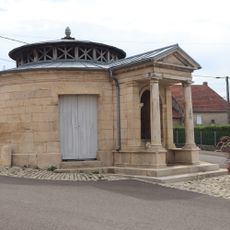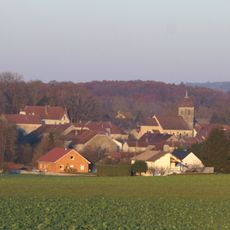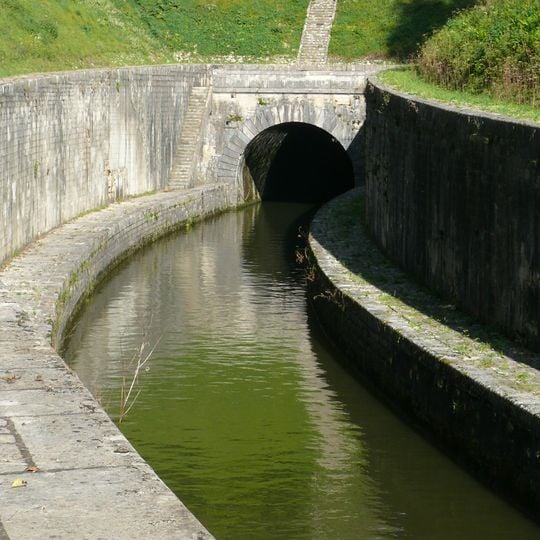
Canal tunnel of Saint-Albin, Canal tunnel in Scey-sur-Saône-et-Saint-Albin and Ovanches, France.
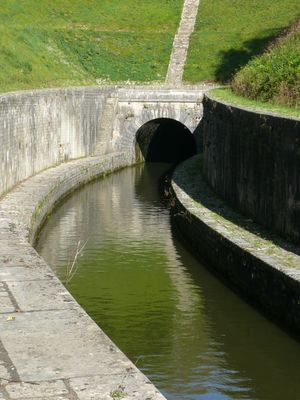
The Canal Tunnel of Saint-Albin is a 681-metre-long, 6.55-metre-wide passage cut through rock on a 2.2 km diversion canal of the Saône. Its entrance is a semicircular arch of pale stone voussoirs set in a curving wall, with a flight of steps climbing the wall face to a flat-topped parapet. Upstream a guard gate controls access, downstream a lock regulates the water level.
The engineer Philippe Lacordaire designed the tunnel, and work began in 1838 but was interrupted. After campaigns in 1841, 1876 and 1880, it was completed in 1882 under Gustave Bouvaist. The 681-metre passage lets boats bypass a Saône meander and the Chassey-lès-Scey needle dam, saving 7 km.
The tunnel received official recognition as a French historical monument in 1990, reflecting 19th-century engineering for water transportation. When you walk alongside the canal, you can see how carefully the stone structure was built to guide boats safely underground.
The tunnel is still navigable and used by pleasure boats, so check passage times before planning a trip through it. On foot, the canal's banks and the stone arch can be reached from the surrounding communes of Scey-sur-Saône-et-Saint-Albin and Ovanches. The upstream Garde gate and the downstream lock mark the two ends of the 681-metre passage.
The tunnel's upstream entrance is controlled by the Garde gate, while a lock sits at the downstream end. The 681-metre passage, 6.55 metres wide, was driven through rock so that pleasure craft still navigate it today, more than a century after its completion in 1882.
The community of curious travelers
AroundUs brings together thousands of curated places, local tips, and hidden gems, enriched daily by 94,580 contributors worldwide.