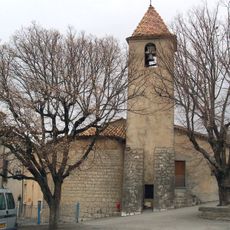
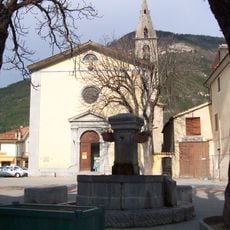
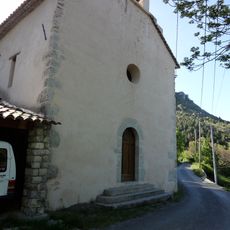
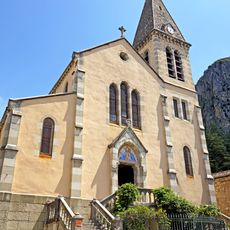
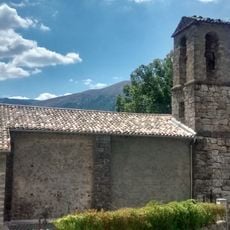
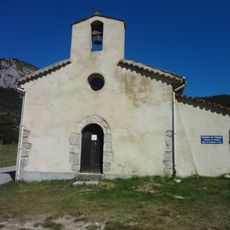
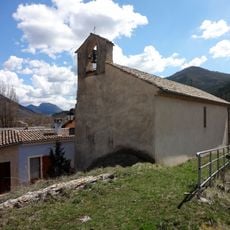
Senez Cathedral, Roman Catholic cathedral in Senez, France.
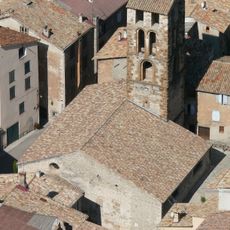
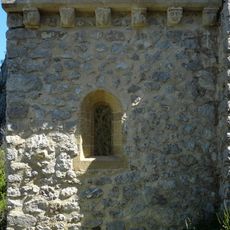
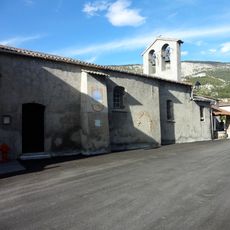
Senez Cathedral is a former Roman Catholic cathedral built in Provençal Romanesque style, with construction beginning in 1176 and consecration on 22 October 1246. The west facade is framed by shallow buttresses, and a sundial of 1673 or 1674, repainted in 1784, is mounted on the west wall. Inside are 16th-century choir stalls, a 17th-century lectern and altar, two carved wooden altarpieces, and tapestries from the late 16th and 17th centuries.
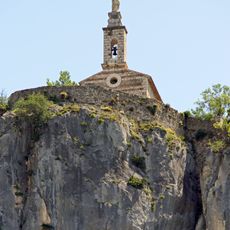
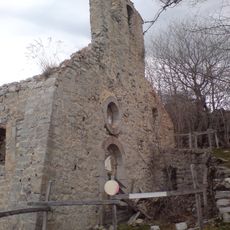
Construction of this cathedral began in the 12th century and continued for over a hundred years before completion. Religious conflicts in later centuries damaged the structure significantly, destroying its bell tower and leaving lasting marks on the building.
The tapestries were commissioned or made at the request of Bishop Ruffo Bonneval in 1783-1784 to mark the end of restorations: seven Aubusson pieces from the late 17th century and one Flemish hanging by Audemar d'Enghien from the late 16th century. Four of the five original Flemish tapestries were stolen in August 1982. The 16th-century choir stalls and the 17th- and 18th-century lectern and altar remain in place.
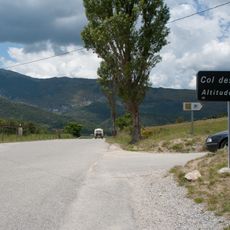
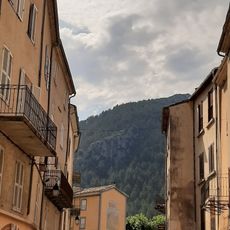
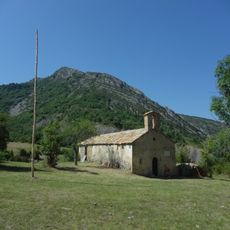
The cathedral stands in the village of Senez, in the Alpes-de-Haute-Provence, at an altitude of about 800 metres. The building is a classified historical monument, listed since 26 October 1910. The west wall carries the 1673 sundial, repainted in 1784 and restored in 1999, which showed a bear in reference to Saint Ours, the first known bishop. Look for it before entering.
In March 1815, Napoleon Bonaparte stopped here to admire the tapestries, a fleeting moment that connected this remote location to major history. This brief visit has remained in local memory and makes the cathedral more than just a religious building.
The community of curious travelers
AroundUs brings together thousands of curated places, local tips, and hidden gems, enriched daily by 93,529 contributors worldwide.