Die Cathedral, Romanesque cathedral in Die, France
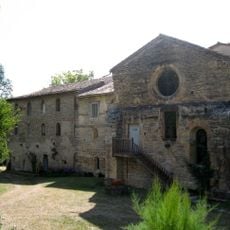
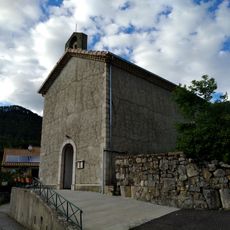
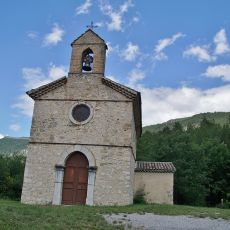
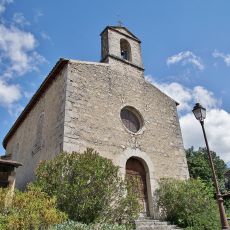
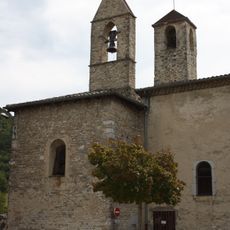
Die Cathedral is a former Roman Catholic cathedral in Die, Drôme, built from the 12th century. Its Romanesque bell tower-porch (c. 1160–1180) rises in pale grey and beige stone, topped by a metal framework; below three tall pointed-arch openings sits a round clock with Roman numerals in a pointed recess. The south nave wall dates from 1190–1220, and a lower sloping-roofed section adjoins the tower's right side.
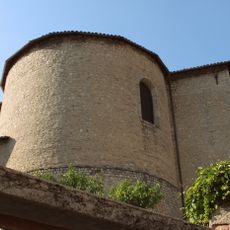
The Romanesque bell tower-porch dates from about 1160–1180 and the south nave wall from 1190–1220. The building was consecrated in 1250. Wars of Religion in the 16th century caused the vaults and apse to collapse and destroyed the canons' cloister and baptistery. Rebuilding was slow, and the cathedral was consecrated again in 1699. The bishopric was suppressed in 1801 and annexed to Grenoble.
The name Notre-Dame refers to the Virgin Mary, to whom the former cathedral is dedicated. The diocese that it served existed from the 4th century until 1801, when the see was transferred to Valence; the building is now a classified Monument historique, listed in 1840.
The building stands in the center of Die and is easy to reach on foot. Visitors can admire the exterior anytime, and regular hours allow access to explore the interior.
The bell tower porch dates from about 1160-1180 and was restored in the early 20th century, which gave its top level the metal framework and open pointed-arch stage seen today. The south nave wall was built between 1190 and 1220.
The community of curious travelers
AroundUs brings together thousands of curated places, local tips, and hidden gems, enriched daily by 94,660 contributors worldwide.