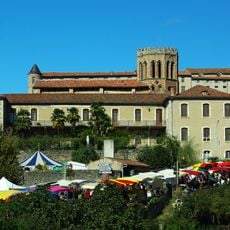
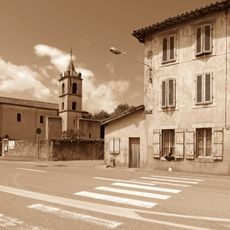
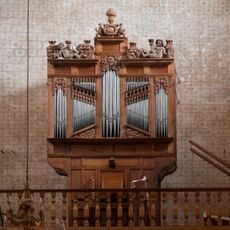
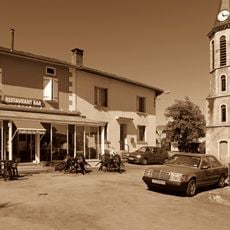
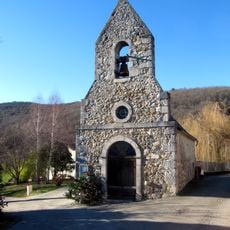
Saint-Lizier Cathedral, Romanesque cathedral in Saint-Lizier, France
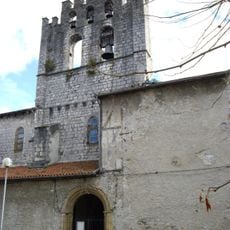
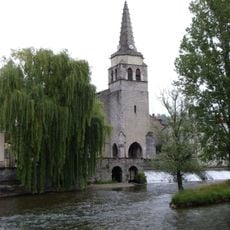
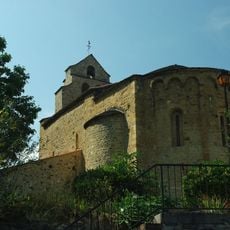
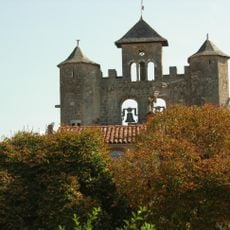
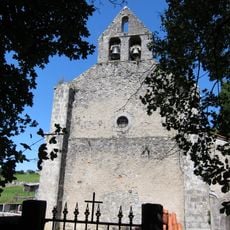
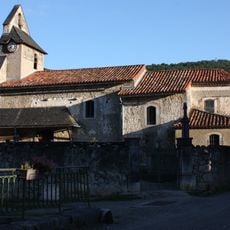
Saint-Lizier Cathedral is a Romanesque church with a single nave of three bays, a transept and three apses. The central apse, preceded by a barrel-vaulted bay, was built at the end of the 11th century; the two lateral apses, of unequal depth, are set in roughly built walls two metres thick. The nave walls are of rough stone up to two-thirds of their height, raised in the 13th and 15th centuries with Gothic windows and rib vaults.
Built in the 11th century and consecrated in 1117 under Bishop Jordanes I, the cathedral was enlarged with a transept and three apses. In 1655 Bishop Bernard de Marmiesse merged the two chapters, and Saint-Lizier ceased to be a cathedral; the diocese was suppressed in 1790 and confirmed by the Concordat of 1801.
The apse walls carry 12th-century Romanesque frescoes attributed to the workshop of the Master of Pedret, a Catalan painter active in the Pallars and Val d'Aran. They were uncovered in 1960. The cul-de-four holds a 13th-century Christ in Majesty. The frescoes were likely linked to Bishop Raimond de Durban of Barbastro, a native of Durban-sur-Arize who co-consecrated the cathedral with Bishop Jordanes I in November 1117.
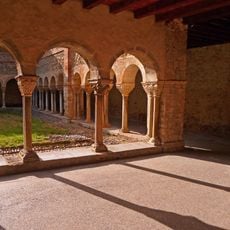
The cathedral sits at 1 Rue de l'Hotel-Dieu in the town center and is easy to reach from surrounding streets. The adjoining cloister and religious artworks are open for viewing during regular visiting hours.
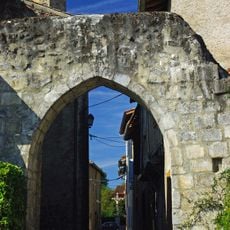
The central apse features three flat surfaces built using large stones and ancient marbles recovered from the city's Roman fortifications. These reused materials show how the medieval period drew on the ancient past to shape its own construction.
The community of curious travelers
AroundUs brings together thousands of curated places, local tips, and hidden gems, enriched daily by 94,595 contributors worldwide.