Chapelle Saint-Gonéry, Medieval chapel in Plougrescant, France
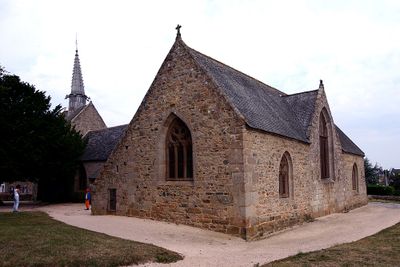
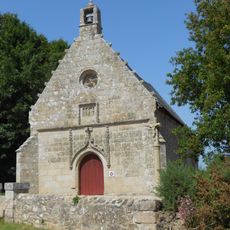
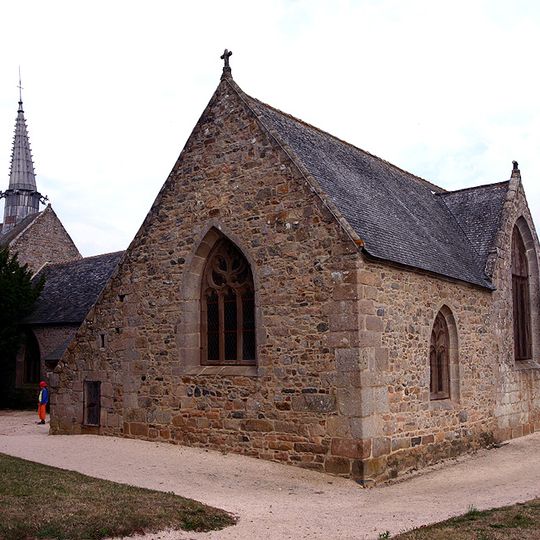
Chapelle Saint-Gonéry consists of a massive Romanesque bell tower-porch with a two-slope roof, followed by a single nave and a flat-chested choir forming a tau shape. The west wall has a round-arched doorway with uncut voussoirs, and a circular stair turret at the south-east corner. The tower is topped by a leaning lead spire added in 1612.
A probable 12th-century oratory, possibly on a 10th-century fire-tower site, was rebuilt in the 15th century when pilgrimage growth added a west nave and flat-ended choir; the old chapel became a bell tower-porch. The lead spire dates from 1612, the tomb of Bishop Guillaume du Halgouët from 1599, and the northwest entrance from 1780.
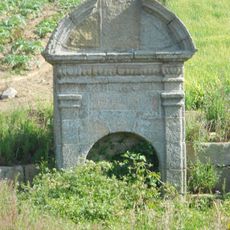
The placître around the chapel, laid out in the 16th and 17th centuries, holds a triumphal gate, a sacred fountain and an outdoor preaching pulpit. A local cultural association now works to safeguard the monument and open it to the public. The west door is carved with three saints: Tugdual, Yves and Gonéry.
The chapel stands in the village of Plougrescant, with the parish enclosure, its triumphal gate and outdoor pulpit, and the sacred fountain grouped around it, so the whole set can be seen on foot in one stop. The north-west entrance dates from 1780. The adjacent cemetery has been separately classified since 1942.
The lead spire added in 1612 leans because its base was too weak: the base tilted one way while the spire inclined the other, giving the tower its characteristic silhouette. Consolidation work was carried out, but the spire was left as it was. In the churchyard stands a separate outdoor preaching pulpit.
The community of curious travelers
AroundUs brings together thousands of curated places, local tips, and hidden gems, enriched daily by 94,357 contributors worldwide.