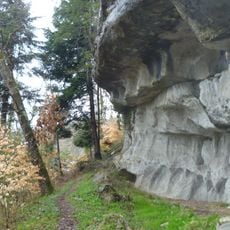
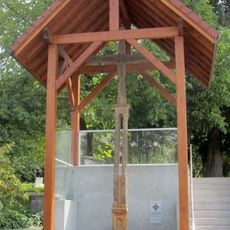
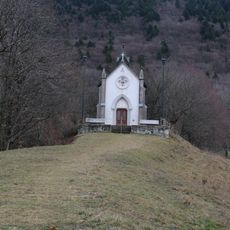
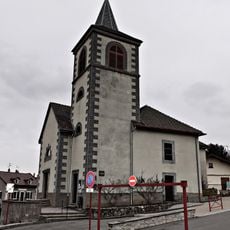
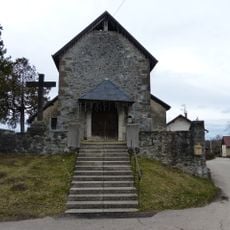
Cave aux Fées, Neolithic dolmen in Saint-Cergues, France.
The Cave aux Fées is a Neolithic burial structure featuring a rectangular internal chamber surrounded by large stone slabs. The construction uses massive stone blocks arranged as supporting walls that define an enclosed space, typical of dolmen architecture from this prehistoric era.
This dolmen dates from the Neolithic period and shows influences from the Bell Beaker culture, evidenced by pottery fragments with geometric patterns found at the site. Its historical importance led to its classification as a protected monument in 1889.
Locals call it the "Cave aux Fées" or "Chambre aux Fées", the fairies' cellar or chamber, a name attached to the dolmen in popular tradition. It stands on the old salt road to Genoa, near the bridge over the Chandouze stream, beside the road from Annemasse to Thonon-les-Bains. The gaps between the upright stones are still packed with small stones, and the chamber floor shows traces of small paving.
This site sits at the foot of the Voirons massif and is freely accessible year-round without scheduled hours. Plan your visit for clear weather, as the mountain location means conditions can change quickly and terrain around the ruins may be uneven.
The capstone is a single arkose slab about 5 m long, 3.2 m wide and 0.4 m thick, estimated at 15 tonnes, now split in two. Henri Gosse recorded in 1886 that the northern end slab reached 2.80 m. The chamber floor lies about 1.50 m below the surrounding ground after a landslide.
The community of curious travelers
AroundUs brings together thousands of curated places, local tips, and hidden gems, enriched daily by 94,657 contributors worldwide.