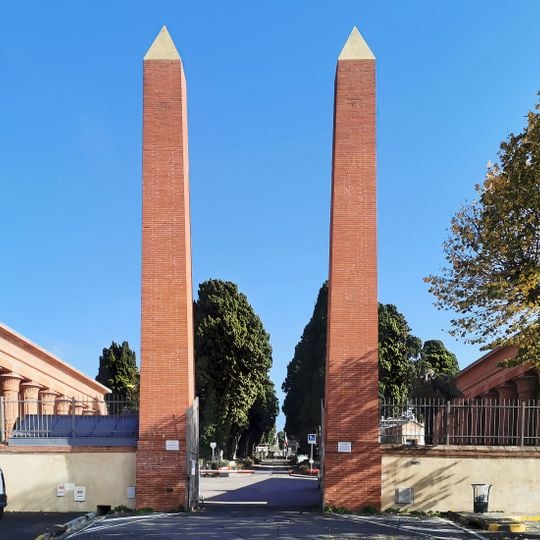
Cemetery of Terre Cabade, Protected heritage cemetery in Toulouse, France
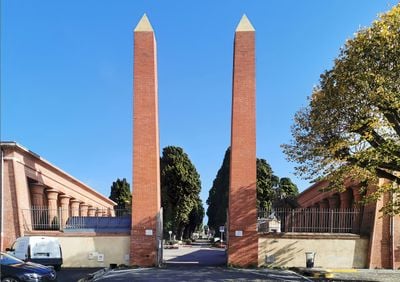
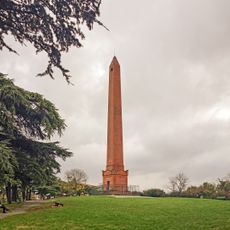
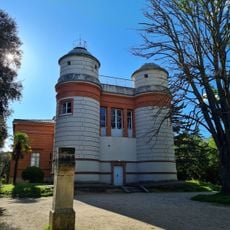
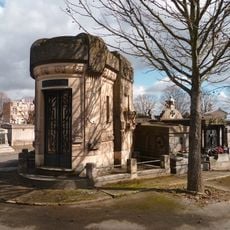
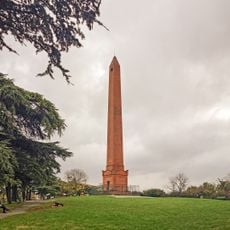
The cemetery of Terre Cabade is the largest cemetery in Toulouse, covering 33 hectares on the slope of Jolimont. Its main entrance, designed by Urbain Vitry in a neo-Egyptian style, features two brick obelisks with gilded pyramidions and pavilions with papyriform columns. The old cemetery has six sections, while the newer Salonika cemetery, opened in 1915, lies across the chemin de Caillibens. A stone mausoleum bears the inscription "FAMILLE" above its metal grille door.
The site was opened in 1840 to replace the overcrowded Saint-Sernin cemetery in the city center. New sections were added throughout the 20th century as the city grew and demand for burial space increased.
The main entrance, designed by city architect Urbain Vitry and inaugurated in 1840, is neo-Egyptian: two brick obelisks capped with gilded pyramidions flank the portal, and two pavilions have papyrus-shaped brick columns. It was listed as a monument historique on 30 July 2019. The name Terre-Cabade comes from Occitan terra cavada, "excavated earth", recalling the clay pits worked by brickmakers before the cemetery opened.
The cemetery is on the western edge of Toulouse and can be reached by car or public transport from the city center. Visiting on a weekday is a good idea, as the paths tend to be quieter and easier to walk through.
The name comes from the Occitan expression 'terra cavada', meaning 'excavated earth', a reference to the clay pits that once occupied the site before it became a cemetery. This makes it one of the rare French cemeteries whose name points directly to an industrial past rather than a religious or geographic one.
The community of curious travelers
AroundUs brings together thousands of curated places, local tips, and hidden gems, enriched daily by 93,340 contributors worldwide.