Col de Panissars, Mountain pass and archaeological site at Le Perthus, France-Spain border
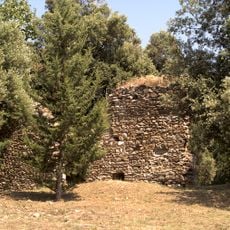
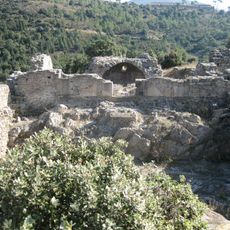
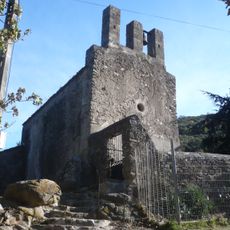
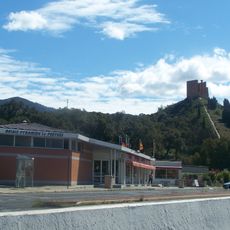
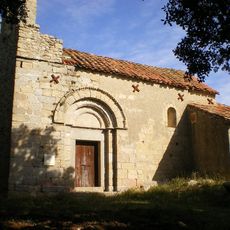
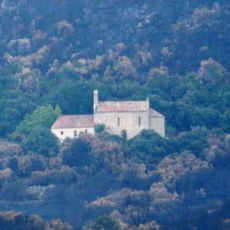
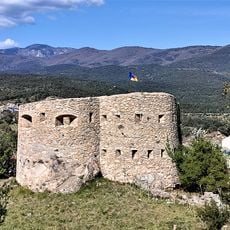
Col de Panissars is a 325 m pass at the western end of the Albères massif, on the border between Le Perthus and La Jonquera, just west of the hill crowned by Fort de Bellegarde. On the pass stand the ruins of the Benedictine priory of Santa Maria de Panissars, built over a large Roman structure identified as the Mansio Summum Pyrenaeum, and a French military cemetery. A tall square stone tower rises on the wooded ridge above.
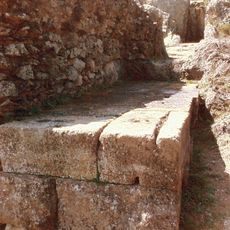
The pass was already a crossing point in prehistoric times and later linked the Roman Via Domitia and Via Augusta at a spot called Summum Pyrenaeum. Pompey raised his trophy there after his victory in Hispania; its remains were rediscovered in 1983. On 30 September and 1 October 1285 the army of Peter the Great of Aragon destroyed that of Philip III of France here, ending the Aragonese Crusade; Philip died days later in Perpignan.
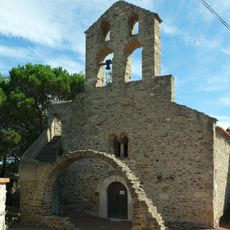
The name Panissars comes from the Latin "panis" (bread), as the pass was a place where travellers could find food. A Benedictine priory dedicated to Santa Maria was built here in the 11th century on the route to Santiago de Compostela, and its ruins remain beside the Roman site. The old French customs post, the tour des burots, still stands on the pass.
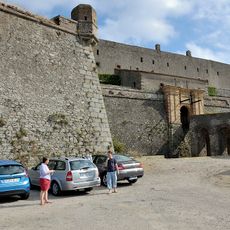
The pass lies between Le Perthus and La Jonquera, just west of and below the hill crowned by Fort de Bellegarde; the main road and motorway use the neighbouring Perthus pass, so the site is reached on foot. The Roman remains and the 1764 boundary pyramid no. 567 stand about 250 m west of the pass, near the reservoir and the Panissars redoubt.
Excavations have uncovered fragments of a Roman monument erected by an ancient military commander that lay hidden for centuries. The discovery reveals how critical this mountain passage was for military control in antiquity.
The community of curious travelers
AroundUs brings together thousands of curated places, local tips, and hidden gems, enriched daily by 92,777 contributors worldwide.