Augustinian convent, Gothic convent in Toulouse, France
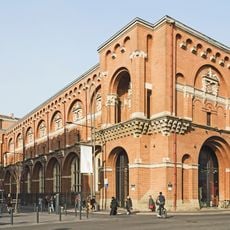
The Augustinian convent is a Gothic brick complex built between 1310 and 1341 at the corner of rue du Musée and rue des Arts. Its church has a single wide nave with three chapels opening directly onto it, without a transept, and a square brick bell tower with a crenellated top. A cloister begun in 1341 and completed in 1396 connects the buildings.
The Augustinian order founded the convent in 1269 outside Toulouse's city walls and relocated it inside the city between 1310 and 1341 with papal permission. The structure was rebuilt after a major fire in 1463 and took its present form over the following decades.
The name reflects the Augustinian order that founded this as a religious community hub. Today visitors walk through spaces that still carry traces of monastic life while viewing the art collection that now fills these rooms.
Access to the convent is through Rue de Metz on the southeast corner, where visitors descend steps to reach the cloister. The Darcy Staircase provides a way up to the upper galleries for a complete circuit through the building.
The 1463 fire, started by a careless baker, collapsed most of the convent's roofs and destroyed part of its archives. Rebuilding began only in 1495 with masons Martin Pujol and Pierre d'Arroye, and the church was reconsecrated on 30 June 1504. The convent's library later held important manuscripts, looted in 1542.
The community of curious travelers
AroundUs brings together thousands of curated places, local tips, and hidden gems, enriched daily by 93,128 contributors worldwide.