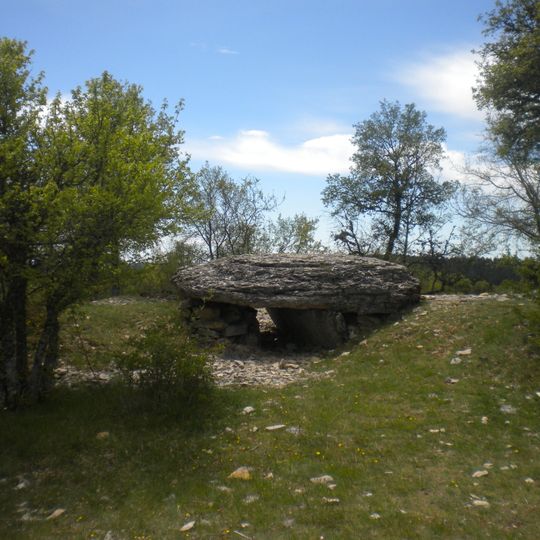
Dolmen de Chamgefège, dolmen in Balsièges, France
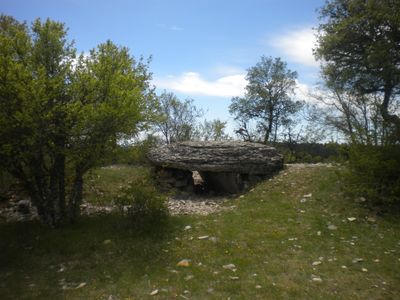
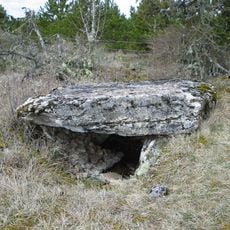
The Dolmen de Chamgefège is an ancient stone chamber located in Balsièges in the Lozère region of France, measuring roughly 4 meters long and wide with a heavy stone roof over 4 meters in length. The structure features upright stones along its sides, a short entrance corridor, and a trapezoidal interior space that was originally surrounded by a circular earthen mound.
The Dolmen de Chamgefège was built approximately 4,000 to 5,000 years ago by early communities and ranks among Europe's oldest human-made monuments. Protected as a classified historical monument since 1889, it preserves clues about ancient burial practices and the lives of those who constructed it.
Local tradition called the site Baoumo des Geons, the giants' cave, and Teoulo de la Geonto, the giantess's tile, names recorded before the dolmens were excavated in the last quarter of the 19th century by M. de Vibraye and Émile de Moré. The "tile" is the great capstone, 4.65 m long and 0.60 m thick, now fissured.
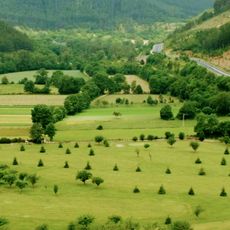
The Tuile de la Géante dolmen lies about 300 m west of the Changefège hamlet, on the Changefège causeway in Balsièges; the Couronne de Mende dolmen is about 300 m north-east of the hamlet, on a spur above the Lot valley. The two are reached on foot along tracks across open grassland, so wear walking shoes and carry water. The chamber is entered through a corridor opening to the south-east, and the capstone stands about 1.45 m above the floor, so most adults must stoop.
Archaeologists discovered clay vessels, a flint blade, and bone beads inside the chamber, indicating it served as a burial site for rituals and ceremonies. These artifacts reveal that the tomb was part of a larger community with established practices that help us understand how early people organized their sacred spaces.
The community of curious travelers
AroundUs brings together thousands of curated places, local tips, and hidden gems, enriched daily by 92,930 contributors worldwide.