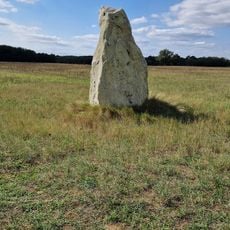
La Bajoulière dolmen, dolmen in Saint-Rémy-la-Varenne, France
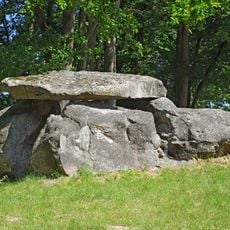
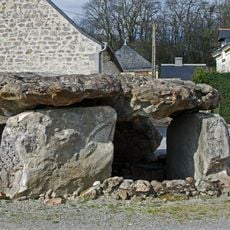
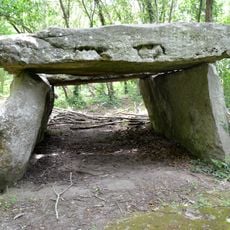
La Bajoulière dolmen is an ancient stone burial chamber from the Neolithic period, located in Brissac Loire Aubance in Maine-et-Loire, France. The structure features large gray sandstone blocks arranged to form a grave chamber approximately 7.5 meters long and 1.8 meters high, covered by a heavy capstone that has cracked over the centuries.
This structure was built during the Neolithic period as a burial place for the dead of ancient communities. Excavations between 1979 and 1983 uncovered bones, flint tools, stone axes, arrowheads, and decorated pottery that revealed how early peoples conducted burial practices and developed their crafts.
The name Pierre Couverte, "covered stone", refers to the massive capstone. In 1144 nuns from the abbey of Nyoiseau used the dolmen as a chapel, according to a cartulary of Saint-Aubin d'Angers. Local farmers long held that the four-piece fracture of the capstone came from a lightning strike, though an 1865 lithograph already shows it broken.
The dolmen stands on a meadow at La Fontaine, in the commune of Saint-Rémy-la-Varenne, reached by rural lanes; the ground around the stones is bare and sandy. There are no facilities at the monument itself, so bring water and wear sturdy shoes for the uneven grass. The site can be visited freely at any time of day.
The heavy capstone bears visible cracks that local tradition attributes to a lightning strike during a storm, an event long remembered in village stories. These marks serve as a tangible reminder of the natural forces that have shaped this monument over thousands of years.
The community of curious travelers
AroundUs brings together thousands of curated places, local tips, and hidden gems, enriched daily by 92,743 contributors worldwide.