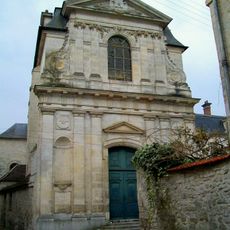
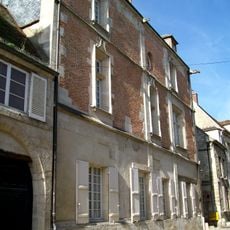
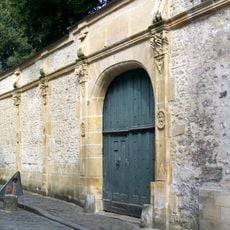
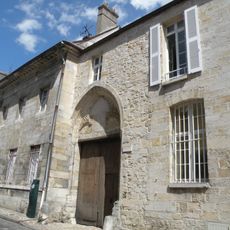
Château de Valgenceuse, Private estate and gardens in Senlis, France.
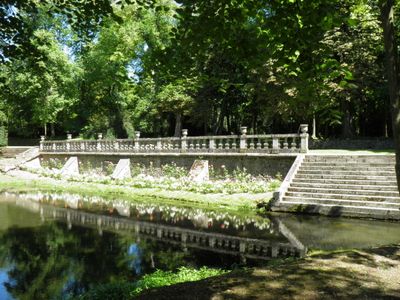
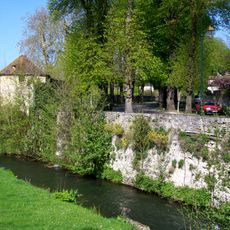
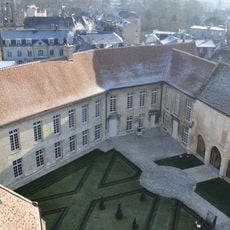
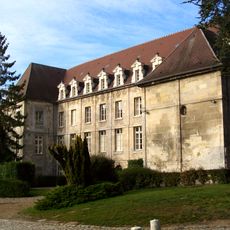
Château de Valgenceuse is a neoclassical building with a single main block topped by a central pediment, its facade punctuated by niches holding full-length statues and busts. Two small wings project slightly on the west side, where a large balustraded terrace links them. The terrace, with its balustrade, a goddess statue and staircases, descends toward a water mirror dug alongside the Nonette; a 17th-century boxwood grove with a colonnade, column basins and a fake-ruin icehouse surrounds it.
A dean of the Saint-Frambourg chapter bought the estate in 1396 and left it to the chapter, which sold it in 1582. Jean and Louis Crochet laid out the first park and dug the water mirror in the Nonette around 1620; Lebel completed the work after 1656. The château was rebuilt in neoclassical style at the end of the 18th century, and the A1 motorway cut the park's eastern end in 1964.
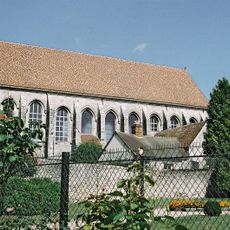
In the 19th century Louise-Célina de Junquières (1806–1875), marquise de Giac by marriage, held a literary salon in the château and its park, receiving Alfred de Vigny, Gérard de Nerval, who admired her and mentions her in his writings, then Alexandre Dumas and his son, who set his novella Césarine in the estate. The orangerie then served as a theatre.
The estate is private and lies along the Nonette in Senlis; the grounds are not open to casual visitors, so access depends on an arrangement made with the owners beforehand. The A1 motorway has cut into the eastern end of the park since 1964, and the château, orangerie and terrace are protected as monuments historiques.
The château's exterior walls contain specialized niches that were purpose-built to display classical statues and busts. These carved recesses allow the building itself to become a gallery for sculpture.
The community of curious travelers
AroundUs brings together thousands of curated places, local tips, and hidden gems, enriched daily by 93,762 contributors worldwide.