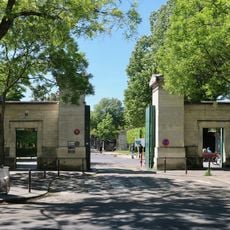
Cenotaph of Baudelaire, cenotaph in Montparnasse Cemetery, Paris, France
The Baudelaire cenotaph is a sculpted monument by José de Charmoy, set against the wall separating the cemetery's western part from rue Émile-Richard, between the 26th and 27th divisions at the east end of the transverse avenue. The stone figure of the poet, head resting on his hands, rises in front of a tall ornamental backdrop that merges into the wall.
A public subscription launched by Léon Deschamps in La Plume on 1 August 1892, twenty-five years after Baudelaire's death, funded the monument. The critic Ferdinand Brunetière attacked the project in the Revue des Deux Mondes that September, judging Baudelaire's work unhealthy; the quarrel delayed it for a decade. Auguste Rodin had agreed to sculpt it, but José de Charmoy made and donated the work, inaugurated on 26 October 1902. It was inscribed as a monument historique in 2023.
The public subscription was launched in La Plume on 1 August 1892 by Léon Deschamps, 25 years after Baudelaire's death, and the committee included Stéphane Mallarmé, Paul Verlaine, Émile Zola and Algernon Swinburne. The critic Ferdinand Brunetière attacked the project in the Revue des Deux Mondes, judging Baudelaire's work unhealthy. The inauguration on 26 October 1902 was led by Armand Dayot, with Marguerite Moreno and Clovis Hugues taking part.
The memorial sits within the cemetery grounds alongside other graves and tombs, so visitors should dress respectfully and move quietly through the space. Morning visits work best when crowds are lighter and natural light makes the carved details easier to see.
A cenotaph is an empty tomb, meaning Baudelaire is not actually buried at this spot but rests elsewhere in the cemetery. This choice emphasizes the artistic honor given to the poet separate from his actual final resting place.
The community of curious travelers
AroundUs brings together thousands of curated places, local tips, and hidden gems, enriched daily by 92,837 contributors worldwide.