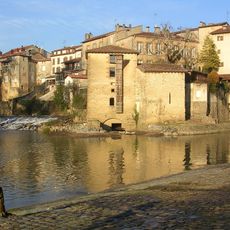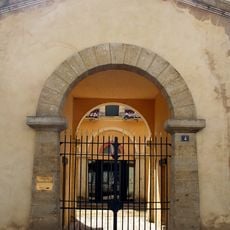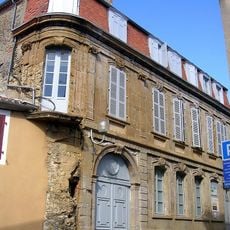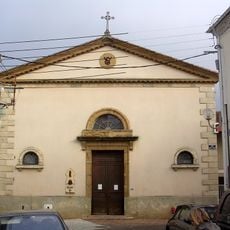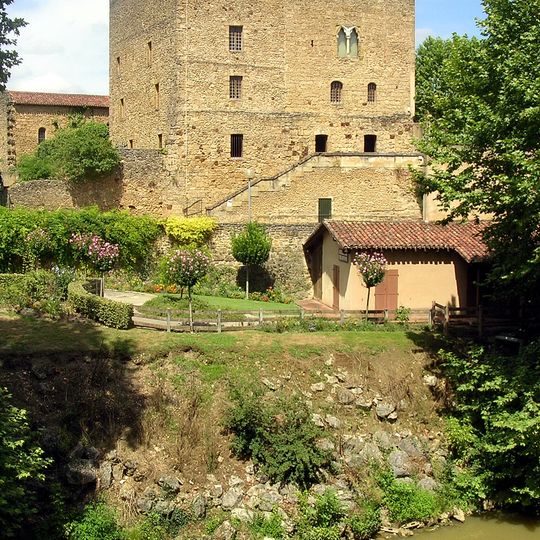
Donjon Lacataye, Medieval castle in Mont-de-Marsan, France.
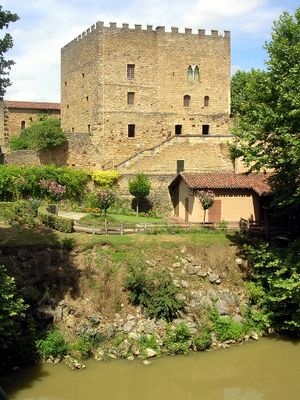
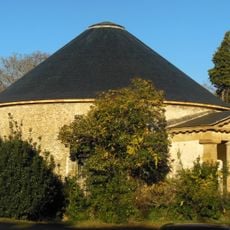
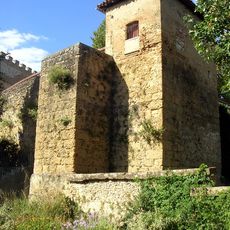
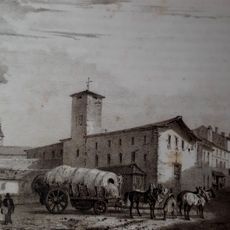
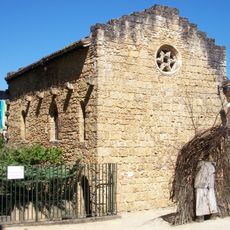
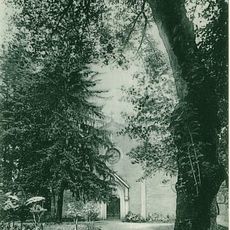
The Donjon Lacataye is a medieval fortress in Mont-de-Marsan built with massive stone walls from local sedimentary rock. The structure comprises two connected buildings that originally served as the residence of the Viscount's family.
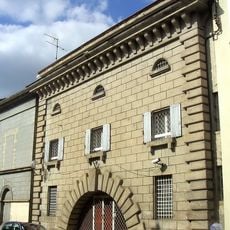
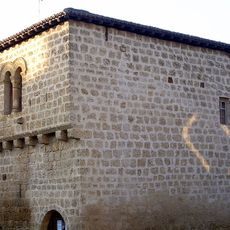
The building consists of two adjoining Romanesque houses in coquillère stone, probably begun around 1313 by Marguerite de Moncade, wife of the Viscount of Foix-Béarn, though her father Gaston VII or sister Constance may have started it earlier; the chapel was confirmed in 1277. The Viscounts of Marsan abandoned it from the 15th century, and in the 16th century the upper parts were crenellated. In 1860 mayor Antoine Lacaze gave it to the town as a barracks.
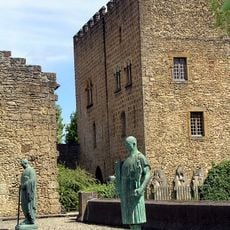
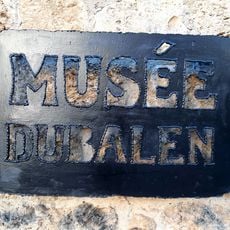
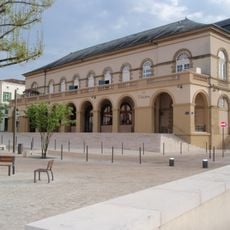
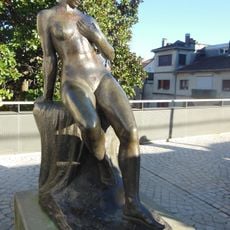
It now houses the Musée Despiau-Wlérick, displaying modern figurative sculptures created by two local artists, Charles Despiau and Robert Wlérick. Visitors can see their works displayed within the historic walls.
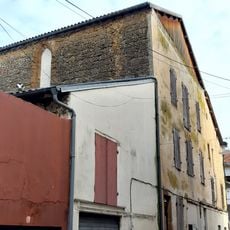
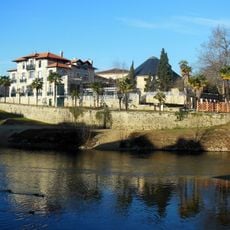
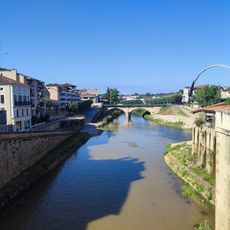
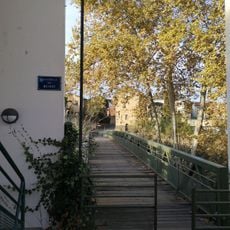
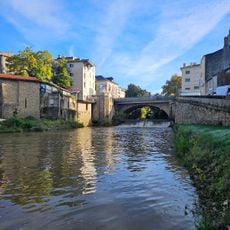
The building stands on the right bank of the Midou in the former Pujolin suburb, on the eastern side of the old town. The museum entrance is reached from the street; inside, the central wall with its Romanesque windows shows where the two houses meet. Another Romanesque house, once enclosed in the town wall, stands 40 m to the west, its east and west walls still fitted with corbels that carried the floors of vanished neighbouring houses.
The name Lacataye was adopted in the late 1960s to promote the new museum; before that it was called tour la Cataye, tour Pujolin or the old Caserne Lacaze. It most likely derives from a Gascon word for livestock and farm equipment, from Latin capitalis.
The community of curious travelers
AroundUs brings together thousands of curated places, local tips, and hidden gems, enriched daily by 92,825 contributors worldwide.