Fort de Beauregard, Military fort in Fénay and Longvic, France.
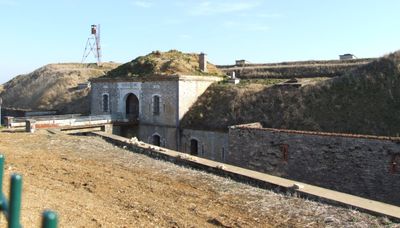
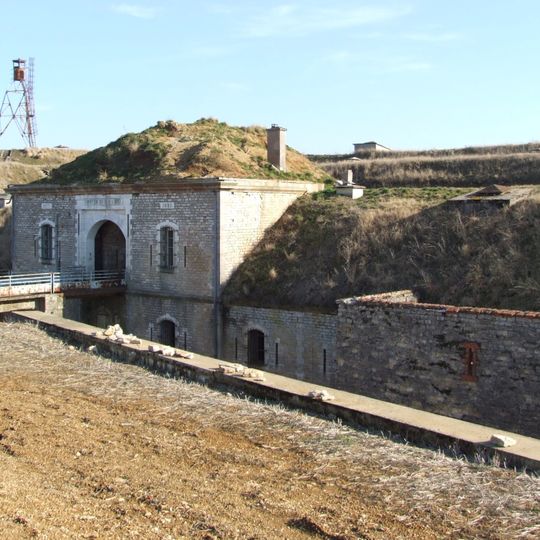
Fort de Beauregard is a military fort located in the municipalities of Fénay and Longvic with a rectangular footprint surrounded by a six-meter-deep moat and double curtain walls. The structure lacks artillery embrasures and features instead a simple defense design with a metal watchtower and underground powder storage chambers.
The fort was constructed between 1877 and 1881 as part of the Séré de Rivières defensive network designed to protect Dijon. Its creation followed the Franco-Prussian War and reflected France's need for reinforced security in the region.
In 1887 the fort was briefly renamed fort Fauconnet after Colonel Adrien Fauconnet of the gendarmerie, who led the defence of Dijon against General Gustav von Beyer's Baden troops on 29 October 1870. Mortally wounded, he died on 30 October, after learning of the decree of 27 October naming him brigadier general. The name was tied to the "ministère Boulanger".
The fort opens to visitors mainly during Heritage Days events, when access to the powder magazines, anti-aircraft gun tanks, and metal watchtower is available. For visiting outside these special occasions, it is best to check local conditions in advance as access may vary depending on season and site maintenance.
The drawbridge is a Poncelet counterweight model, the only one in the Dijon region; of about 90 installed in France, only seven others are said to keep their mechanism. Its inventor, General Jean-Victor Poncelet, designed it in 1820 with articulated counterweights whose mass varies with the deck's position. The chains are still in place at the fort.
The community of curious travelers
AroundUs brings together thousands of curated places, local tips, and hidden gems, enriched daily by 93,133 contributors worldwide.