Fort de Bondues, Military museum and memorial site in Bondues, France
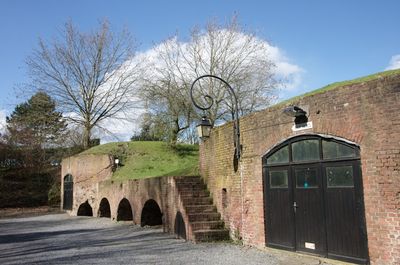
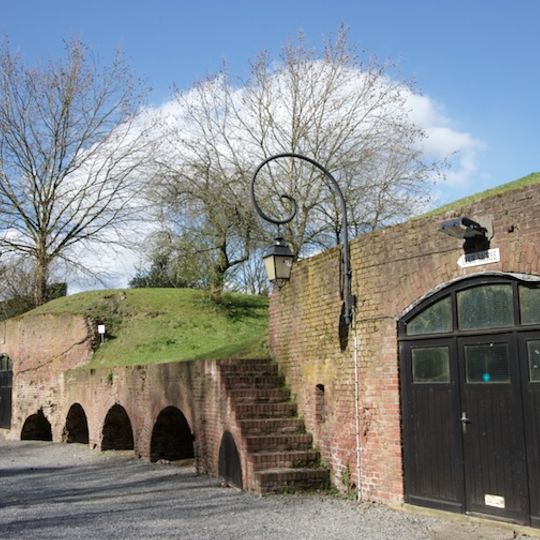
Fort de Bondues is a semi-buried Séré de Rivières fort with a trapezoidal plan of 240 by 150 metres, enclosed by a red brick rampart 720 metres long and an 8-metre-wide moat. About two-thirds was destroyed when the Germans dynamited it on 1 September 1944; the rebuilt portion holds the Musée de la Résistance. The entrance facade carries a rounded black wooden double door beneath a sign reading "Musée 39-45".
Built between 1875 and 1885 as part of the Séré de Rivières ring of twelve forts around Lille, it was briefly renamed Fort Lobau by Minister of War Georges Boulanger in 1887, a name reversed that same year by his successor Théophile Ferron. Occupied by German troops from 1914 to 1918 and again from 1940, it served as an ammunition depot before becoming an execution site from 17 March 1943 to 1 May 1944, where 68 resistance fighters were shot. Retreating Germans dynamited the fort on 1 September 1944, destroying about two-thirds of it.
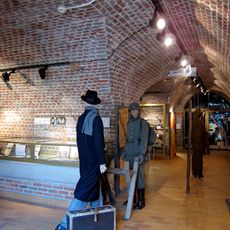
The Museum of Resistance here documents how local people resisted during occupation, showing their stories through displays and personal accounts. Visitors gain insight into the courage and choices that shaped community life during this dark period.
The fort lies on the edge of the Route Nationale 17 from Lille to Menin, at 41 metres altitude. Only about a third of the structure survives, including the Cour Sacrée where the executions took place and the casemates now used as museum rooms. The Monument aux Fusillés stands outside the fort on Avenue du Général de Gaulle.
The fort preserves the names and stories of those executed here, ensuring each victim is remembered as an individual rather than just a statistic. This personal approach to remembrance sets it apart from other war memorials.
The community of curious travelers
AroundUs brings together thousands of curated places, local tips, and hidden gems, enriched daily by 94,540 contributors worldwide.