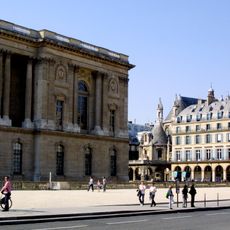
Fontaine de la Croix du Trahoir, fountain in the 1st arrondissement of Paris, France
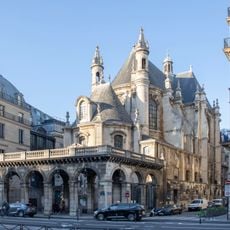
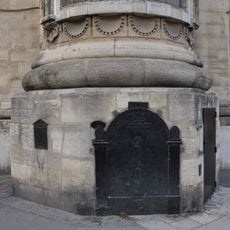
The fontaine de la Croix du Trahoir stands at 53 rue de l'Arbre-Sec and 111 rue Saint-Honoré, a polygonal stone structure built by Jacques-Germain Soufflot in 1776. Its rusticated base carries a carved arched niche with a small figure and the plaque "FONTAINE DE LA CROIX DU TRAHOIR"; above, layered stone courses rise to a rounded corner. Louis-Simon Boizot sculpted the nymph visible on the rue Saint-Honoré side, and a mascaron spouts the water.
The fountain was built in 1529 by sculptor Jean Goujon as part of the city's water supply system for this busy district. In 1775 it underwent major reconstruction under architect Jacques-Germain Soufflot during the reign of Louis XVI, who modernized its design.
The name "Trahoir" derives from the old French "tiroir": cloth was drawn or stretched on this square, which was one of the busiest crossings on the north-south and east-west routes into Paris. A cross stood here for the last prayers of the condemned until it was destroyed in 1789; its stone base with steps served butchers and vegetable sellers as a stall.
The fountain is set into the corner building at the junction of Rue de l'Arbre-Sec (no. 53) and Rue Saint-Honoré (no. 111), so it is seen on foot from the pavement. The sculpted nymph faces Rue Saint-Honoré, while the plaque with the construction date is on the north facade. The ground-floor gallery of the Laboratoire de la création is open to the public.
The square's name comes from the old French "tiroir": cloth was stretched and drawn there. The "dry tree" of the nearby street name is not the gallows but a mythical tree from Marco Polo's tales, sometimes linked to the Oak of Mamre. The stone base of the cross, destroyed in 1789, served as a stall for butchers and vegetable sellers.
The community of curious travelers
AroundUs brings together thousands of curated places, local tips, and hidden gems, enriched daily by 93,268 contributors worldwide.