Saint-Antoine Hospital, Historic public hospital in 12th arrondissement, France
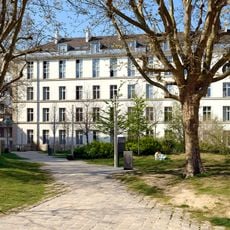
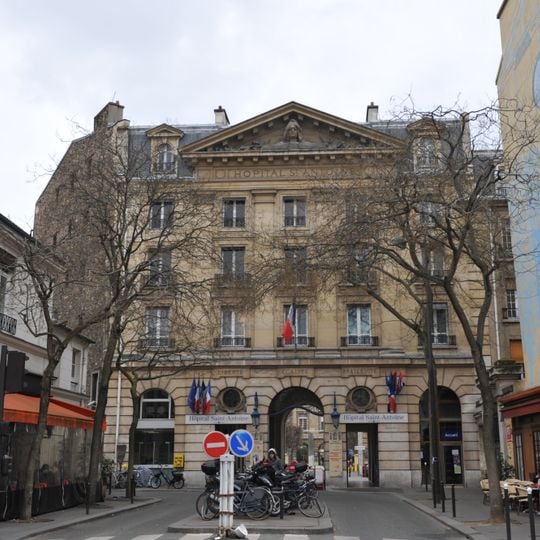
Saint-Antoine Hospital occupies the former Saint-Antoine-des-Champs abbey at 184, rue du Faubourg-Saint-Antoine. Its central stone building has a triangular pediment with a sculpted head, the inscription HOSPITAL St ANTOINE, and, above the arched entrance, the words LIBERTE EGALITE FRATERNITE beneath a tricolour flag. The site holds 780 beds, 22 of them in emergency care, plus 96 day-hospital places.
By decree of 11 February 1791 the Saint-Antoine abbey was declared national property; evacuated by its nuns, it became under the Convention the Hospice de l'Est, meant to supply hospitals to eastern Paris and to thank local residents for their part in the revolutionary events. The church was demolished in 1796 and architect Nicolas-Marie Clavareau was put in charge of fitting out the hospice, starting two extra wings that lack of money soon halted. It took the name Saint-Antoine in 1802, and from 1811 to 1881 the Hospitalières de Sainte-Marthe de Beaune organised care and medicines there.
The name comes from the former Saint-Antoine-des-Champs abbey, whose church was demolished in 1796. A plaque inside the central building honours staff who died for France in both world wars, including Corentin Celton. The hospital has appeared on screen, in an episode of ER and in the film Les Petits Mouchoirs (2010).
The hospital operates around the clock with multiple entry points for different departments and services. First-time visitors should allow time to navigate the large complex and ask staff for guidance to reach specific areas.
During the COVID-19 pandemic, the hospital participated in innovative research programs, notably the Corimuno-Plasma clinical trial examining plasma therapy treatments. These studies contributed new knowledge about treating severe viral illnesses.
The community of curious travelers
AroundUs brings together thousands of curated places, local tips, and hidden gems, enriched daily by 92,780 contributors worldwide.