Glacières de Versailles, Ice storage system in Versailles, France
The Glacières de Versailles are underground ice storage chambers with circular structures reaching depths of 30 meters, lined with straw to maintain cold temperatures. The facility collected ice during winter and preserved it in compact layers to supply frozen water year-round for the palace kitchens.
The first ice houses were built under Louis XIII; Louis XIV later owned thirteen across the park, near the Clagny mills, the Potager, the Ménagerie, Trianon and the Parc-aux-cerfs. The Trianon ice houses, underground and sealed by a double-door system, were installed by Louis XIV in 1686 and operated until 1909. Three survive: two circular ones at the Petit Trianon and one at Satory.
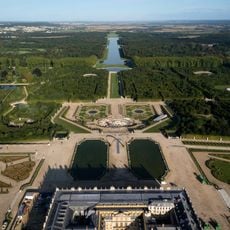
The ice was cut in winter from the Grand Canal or the pièce d'eau des Suisses by day labourers using axes, hatchets, mallets and hooks. It cooled drinks, was made into sorbets and was used against fever. The two ice houses of Trianon, underground and sealed by a double-door system, were installed by Louis XIV in 1686.
The two surviving ice houses at the Petit Trianon are underground and sealed by a double-door system, so they cannot be entered; visitors see the circular stone structures from outside. The third survivor stands at Satory. The thatched roofs and rough stone walls are best examined on foot along the park paths, and the cobbled ground in front can be uneven.
The two surviving ice houses at Petit Trianon are underground and sealed by a double-door system; Louis XIV installed them in 1686, and they ran until 1909. The third survivor stands at Satory. Ice was cut from the Grand Canal and the Pièce d'eau des Suisses with axes, hatchets, mallets and hooks.
The community of curious travelers
AroundUs brings together thousands of curated places, local tips, and hidden gems, enriched daily by 93,008 contributors worldwide.