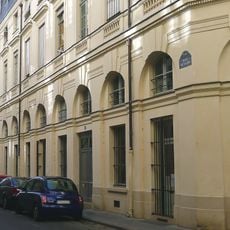
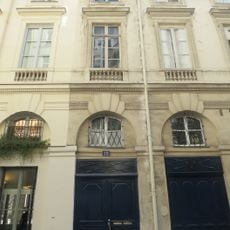
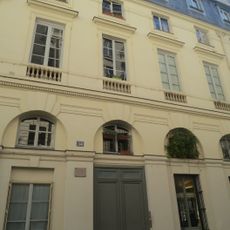
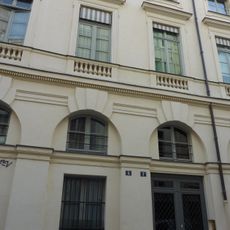
Hôtel Tubeuf, Private mansion in 2nd arrondissement of Paris, France
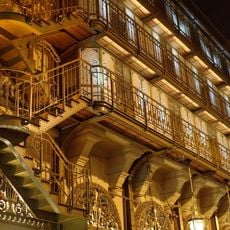
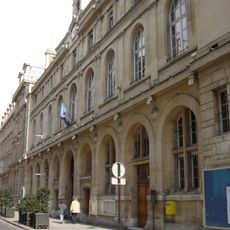
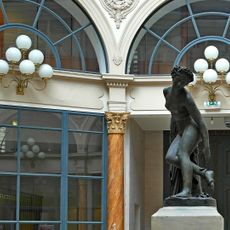
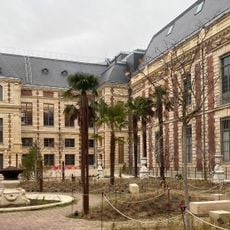
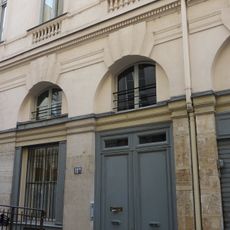
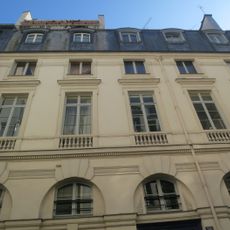
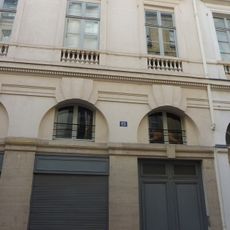
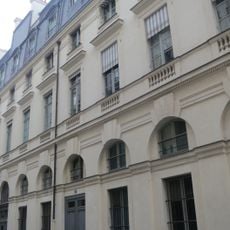
The Hôtel Tubeuf is a private mansion in the 2nd arrondissement featuring brick-and-stone architecture arranged around a central residential block. The building occupies the space between an entrance courtyard and a garden at 8 Rue des Petits Champs, displaying the classic proportions and design of 17th-century Parisian noble residences.
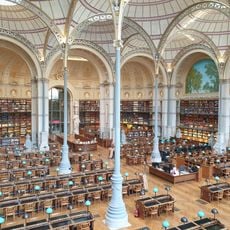
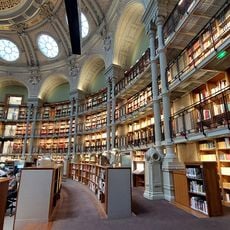
Built from 1635 for Charles Duret de Chevry to designs by Jean Thiriot, the house was still unfinished when Duret died in 1636; his son sold it in 1641 to financier Jacques Tubeuf. Tubeuf rented it to Cardinal Mazarin in 1643, and Mazarin bought the whole compound in 1649, adding Mansart's galleries and Le Muet's 144-metre wing for his library. After 1720 it housed John Law's Indies Company, then the Royal Treasury from 1769, before joining the National Library in 1826.
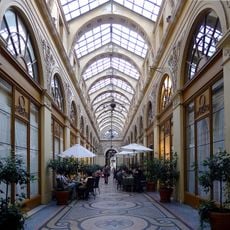
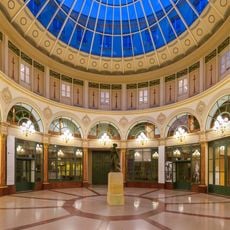
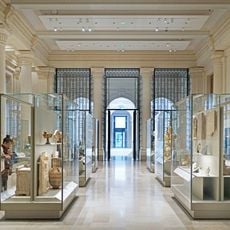
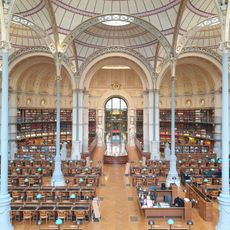
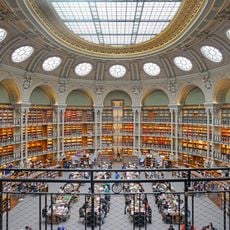
The building's successive names record its occupants: Hôtel Duret de Chevry until 1641, Hôtel Tubeuf from 1641 to 1649, Palais Mazarin from 1649 to 1720, then Hôtel de la Compagnie des Indes. The Cabinet des Médailles, now the BnF Museum, occupies part of it, with the Galerie Mansart and Galerie Mazarin among its exhibition spaces.
The mansion opens to public visits primarily during Heritage Days, while certain sections operate as part of the National Library complex. Check ahead to learn which areas are accessible on regular days, as many spaces serve research functions and may have restricted access.
The Louisiana Purchase Treaty was signed here on 30 April 1803, when the building housed the French Treasury. The site had passed to the Treasury in 1769 after the Indies Company was liquidated, and it stayed with the finances ministry until 1826, when the Treasury moved to rue de Rivoli and the National Library absorbed the mansion.
The community of curious travelers
AroundUs brings together thousands of curated places, local tips, and hidden gems, enriched daily by 92,901 contributors worldwide.