Hôtel de Rohan-Guémené, Private mansion in Le Marais, Paris, France
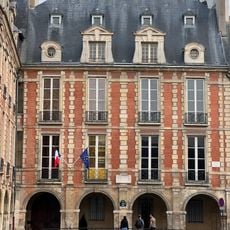
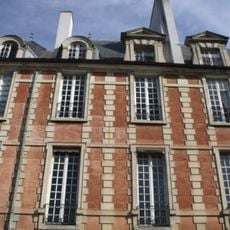
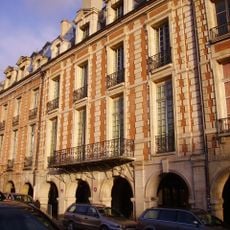
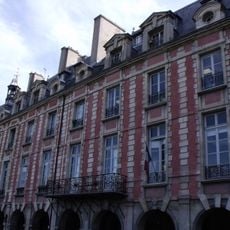
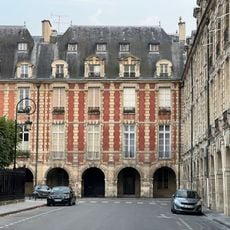
The Hôtel de Rohan-Guémené stands at 6 and 6 bis Place des Vosges and 17 rue des Tournelles, with a central block and two wings around courtyards. Its Place des Vosges facade has orange brick bands between pale stone quoins, eight upper windows with wrought-iron balconies, three large round arches below, and a slate mansard roof with dormers and a stone balustrade. The Tournelles wing, in stone and cob, forms a U around a courtyard.
Isaac Arnauld, a royal finance intendant, bought the plot in June 1605 and had the mansion built; it passed to Marshal de Lavardin in 1612, to Pierre Jacquet in 1621 and to Prince Louis de Rohan in 1637. The last Rohan owner, Henri Louis Marie de Rohan-Guéméné, went bankrupt in 1782 with debts of 33 million livres, and the house was sold in 1797. Victor Hugo rented the second floor of the central block from 1832 to 1848, writing Ruy Blas and Lucrèce Borgia there; the Musée Victor-Hugo opened on 30 June 1903.
The mansion is named after the Rohan-Guémené branch of the Rohan family, whose motto was "roy ne puys, duc ne daigne, rohan suys". Victor Hugo rented the second floor of the central block from 1832 to 1848, paying 1,500 gold francs for 280 m², and wrote Ruy Blas and Lucrèce Borgia there. Since 1903 it has housed the Maison de Victor Hugo, opened after Paul Meurice donated drawings, manuscripts and furniture to the City of Paris in 1902.
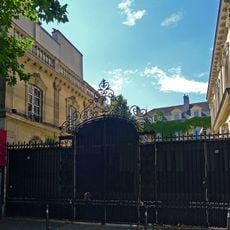
The mansion stands at 6 and 6 bis Place des Vosges, with a second wing at 17 rue des Tournelles; the Victor Hugo museum occupies the central block, while the Tournelles wing is privately owned. The Place des Vosges facade, the vaulted arcade gallery including its floor, and the corner roofs have been classified as historical monuments since 26 October 1954. The eastern Tournelles wing, in stone and cob, forms a U around a courtyard holding one of the last Louis-Philippe fountains in Paris.
The eastern wing on rue des Tournelles, intact from the early 17th century, forms a U around a courtyard with one of the last Louis-Philippe fountains in Paris. In the outbuildings of this wing, the wooden coffins for Napoleon I's tomb at the Invalides were made.
The community of curious travelers
AroundUs brings together thousands of curated places, local tips, and hidden gems, enriched daily by 93,911 contributors worldwide.