Matisse Museum, Art museum in Le Cateau-Cambrésis, France.
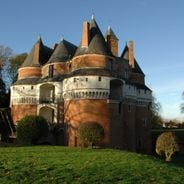
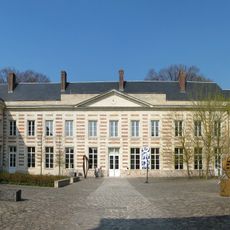
The Matisse Museum occupies the Palais Fénelon and displays over 170 works by Henri Matisse spread across seventeen exhibition rooms. The collection is complemented by photographs from Henri Cartier-Bresson and other artistic pieces.
The museum was founded in 1952 by Henri Matisse himself and was originally housed in Le Cateau's city hall. In 1982, it moved to the Palais Fénelon, where it remains today.
The museum's name honours Le Cateau-Cambrésis, Matisse's birthplace. Its temporary exhibition rooms are named after Ernest Gaillard, the resistance deportee and Cambrai curator who, with François Faugeroux, Lucien Durin and Maurice Guillot, persuaded Matisse to donate works. The Tériade donation brought artists' books and the dining room decorated by Matisse and Giacometti.
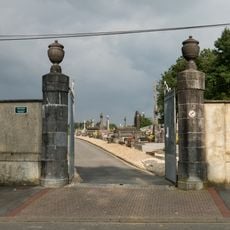
The museum reopened on 23 November 2024 after eighteen months of closure, with 1,000 m² added from the former covered market whose facade was kept. The entrance gate on the street is set between two round columns on square bases, with a black sign reading "Musée Matisse" and "Musée Départemental du Nord". Allow time for the temporary exhibition room of 500 m² as well as the permanent route.
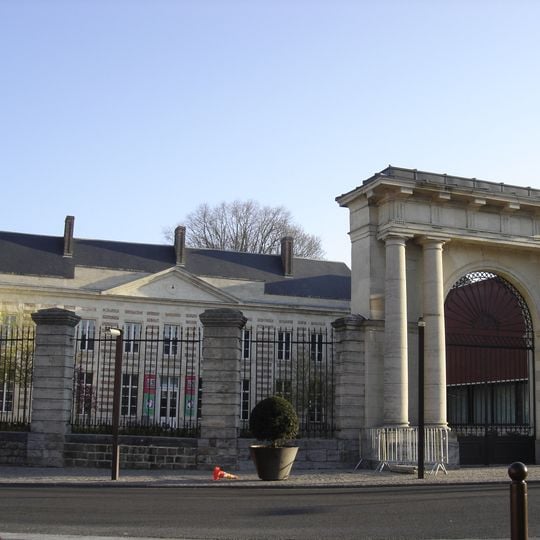
The neoclassical portal with two round columns and a wide arch, now framing the entrance, was designed by Théodore Brongniart, architect of the Bourse de Paris. The wrought-iron gate inside the arch carries a fan-shaped radiating pattern above vertical bars. The museum's temporary exhibition rooms are named after Ernest Gaillard, the resistance deportee and curator of the Cambrai museum who pushed for the museum's creation.
The community of curious travelers
AroundUs brings together thousands of curated places, local tips, and hidden gems, enriched daily by 92,954 contributors worldwide.