Kursaal de Besançon, Cultural venue in Besançon, France
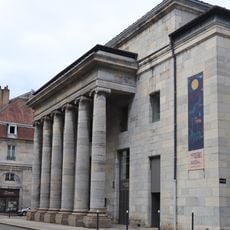
The Kursaal de Besançon is a performance and events center in the city with multiple halls for gatherings and shows. The main hall accommodates larger events while smaller rooms serve various types of meetings and presentations.
Madame veuve Péllegrin funded the building in 1892 to give spa visitors and the garrison soldiers a circus hall and a brasserie; it officially opened in late 1893. Unable to repay the loans, she lost it to seizure, and on 14 March 1895 the municipal council bought it, making it the city's main festival hall. Closed in 1970 for dilapidation, it was fully renovated from 1979 at mayor Robert Schwint's request and reopened in September 1982 with an underground conference room.
The name Kursaal, German for "cure hall", recalls the building's origin as a leisure venue for the spa guests of Besançon-les-Bains. Its circular Grand Kursaal has a domed ceiling decorated with frescoes depicting circus arts, a nod to the circus hall it was built to house. Today it hosts balls, congresses, film screenings, theatre and concerts.
The Kursaal stands at 1 place du Théâtre in the historic centre, with the Salle Proudhon on the ground floor opening directly onto the esplanade. The Petit Kursaal lies in the basement, reached from inside the building, and seats 334 plus 6 places for people with reduced mobility. The upper-floor rooms are reached by stairs or lift.
The upper floor holds seven named rooms, not six: Ory (90 people), Risset (60), Bidault (50), Thévenot (30), Péllegrin (28), plus the foyer de la Danse with a sprung dance floor and blackout mirrors. The ground-floor Salle Proudhon opens straight onto the esplanade.
The community of curious travelers
AroundUs brings together thousands of curated places, local tips, and hidden gems, enriched daily by 93,783 contributors worldwide.