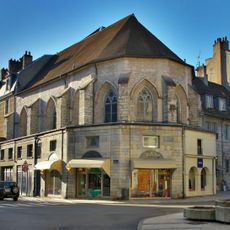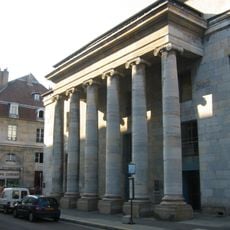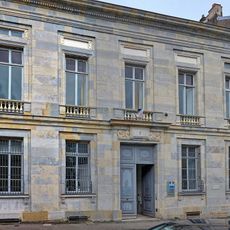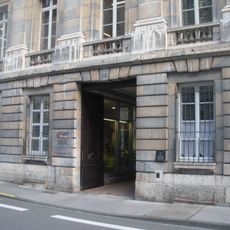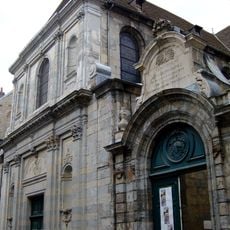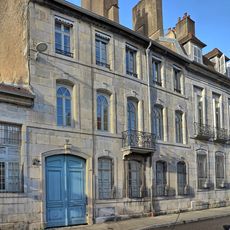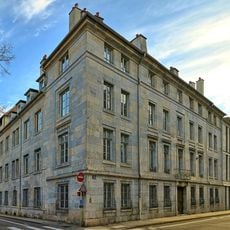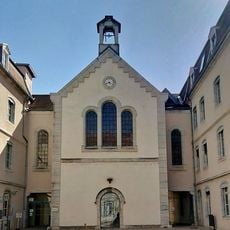
Église Notre-Dame, Romanesque church in Besançon, France.
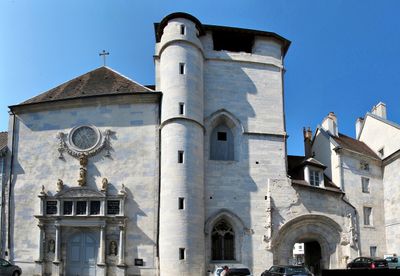
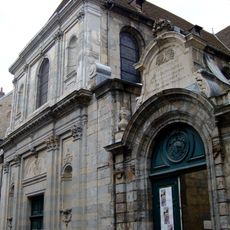
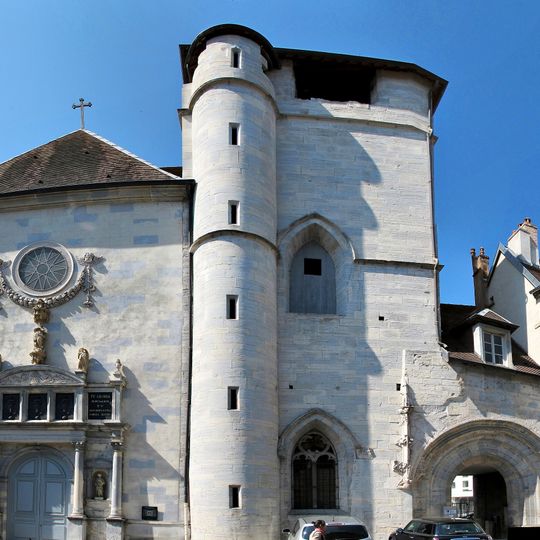
Église Notre-Dame is a church in Besançon that was originally built in Romanesque style and later underwent major architectural changes. The facade was designed in 1720 by architect Jean-Pierre Galezot, while the main portal from 1525 features flamboyant Gothic elements.
The church was founded between 1080 and 1085 by Archbishop Hugh II of Montfaucon and initially served as the abbey church of the Benedictine Saint Vincent monastery. Over time it evolved from its original Romanesque building into the structure visible today with later modifications.
The church is named after Notre-Dame and displays inside a painted frieze with hundreds of historical figures created by Joseph Aubert over several decades. This artistic decoration shapes the appearance of the nave today and draws visitors interested in examining the work closely.
The church is located on Rue Mégevand in the Boucle district and remains accessible to visitors throughout the year as it continues to serve as an active place of worship. This means visiting times may vary depending on services and events.
The bell tower was built in the 16th century and was among the tallest structures in Besançon at that time. Its notable height made it a landmark in the medieval city landscape.
The community of curious travelers
AroundUs brings together thousands of curated places, local tips, and hidden gems, enriched daily by 60,000 contributors worldwide.