Grand séminaire de Besançon, Catholic seminary in Besançon, France
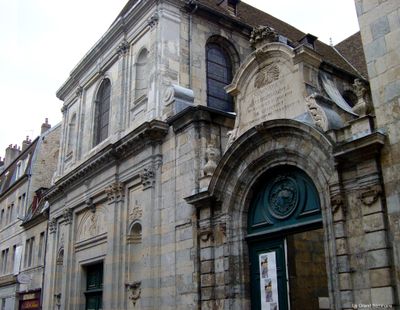
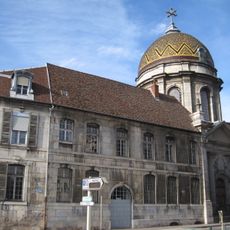
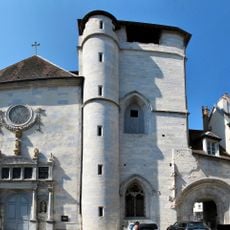
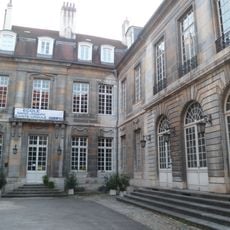
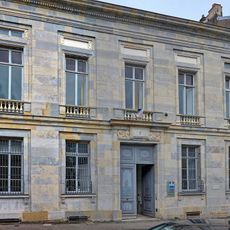
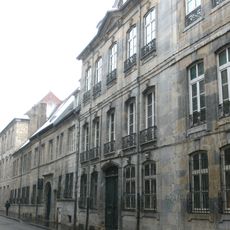
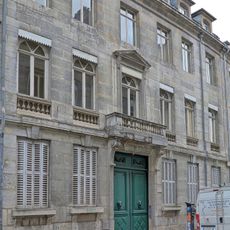
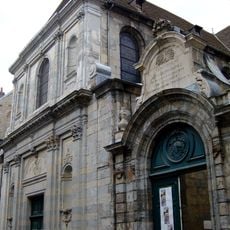
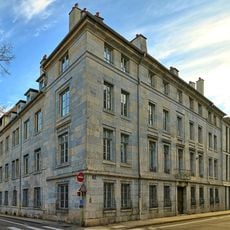
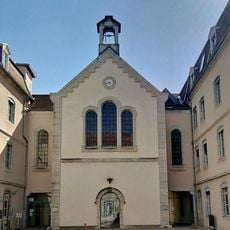
The Grand Séminaire de Besançon occupies a building erected from 1670 to 1695 on Rue Mégevand, in the historic centre of Besançon. Its chapel, built between 1670 and 1688 on a Latin cross plan, presents a two-storey facade of Corinthian pilasters to the street. Inside, the vault shows one of the latest examples of Gothic style in Franche-Comté. The photograph shows a pale ashlar facade with a tall arched window, a rounded archway over a dark green door bearing a circular metal medallion, and a carved Latin inscription above.
The building was constructed between 1670 and 1695 under Archbishop Antoine-Pierre de Grammont. In the 18th century, architect Jean-Pierre Galezot made significant changes to the structure that reflected evolving needs.
The Latin inscription above the entrance arch, ending "PER MULTA PERICULA", can still be read on the facade. The building also appears in Stendhal's novel Le Rouge et le Noir as the place where Julien Sorel lived.
The seminary stands on Rue Mégevand in the historic centre of Besançon, a short walk from the city's main squares. The chapel, listed as a monument historique since 17 March 1926, faces the street with its two-storey facade of Corinthian pilasters. The building itself is not open as a museum; the street frontage and the chapel facade can be seen from outside at any time.
The seminary is the setting of Stendhal's novel Le Rouge et le Noir, where Julien Sorel lives. Above the green door on Rue Mégevand, a carved panel carries the Latin inscription ending "PER MULTA PERICULA".
The community of curious travelers
AroundUs brings together thousands of curated places, local tips, and hidden gems, enriched daily by 92,756 contributors worldwide.