Mégalithes du Guilliguy, Neolithic archaeological site and menhir in Ploudalmézeau, France
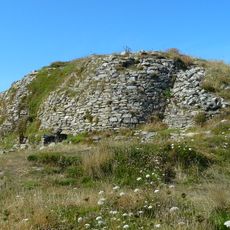
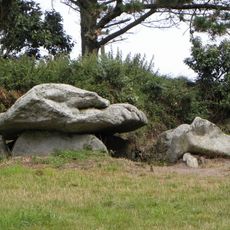
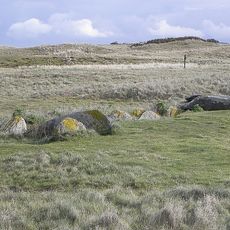
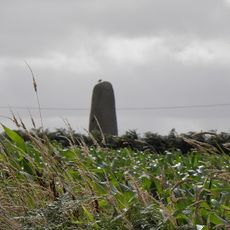
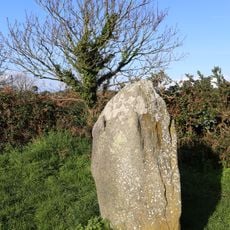
Mégalithes du Guilliguy is a Neolithic site in Brittany with an upright stone made of granite and an underground burial chamber connected by a corridor. The chamber is formed by stone slabs and features a side entrance that was originally sealed with a carefully fitted stone.
This burial site was built roughly 5000 years ago during the Neolithic period, as scientific analysis shows. It belongs to a family of megalithic structures that were constructed over thousands of years across western Europe.
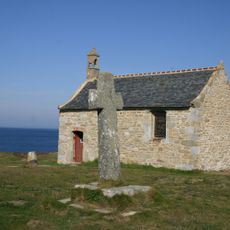
The name Guilliguy comes from old Breton: killi, meaning small wood or bocage, and guic or gui, meaning hermitage, so it can be read as the hermitage of the small wood. The site lies on the route of the Sentier de grande randonnée 34, and the cross now standing on the summit is the last remnant of the former parish complex of the chapel Saint-Usven, which was used until the early 18th century and later destroyed.
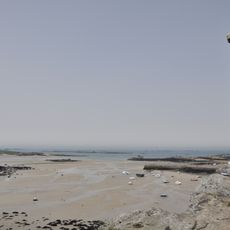
The site is reachable via a walking path that starts from the nearby port area and crosses through local countryside. Sturdy shoes are recommended since the ground can be uneven and the surroundings are exposed to the weather year-round.
The oval stone that sealed the burial chamber's side opening was found buried beside the monument during the 1991–1992 excavations led by departmental archaeologist Michel Le Goffic. The same digs uncovered a Mesolithic flint microlith workshop in a test trench, roughly 8,000 years old.
The community of curious travelers
AroundUs brings together thousands of curated places, local tips, and hidden gems, enriched daily by 94,707 contributors worldwide.