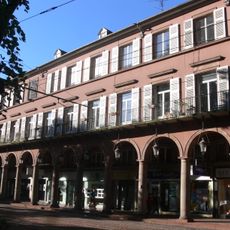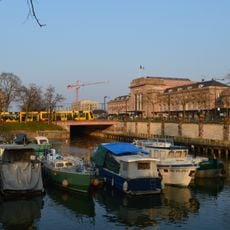
Musée de l'impression sur étoffes, Textile printing museum in Mulhouse, France.
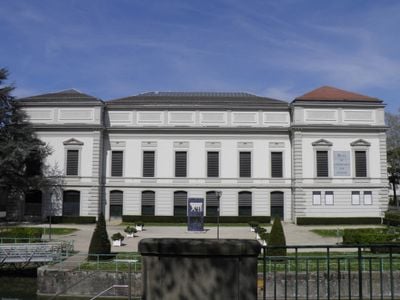
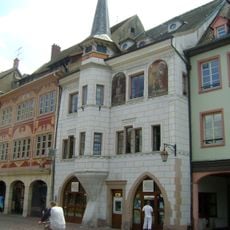
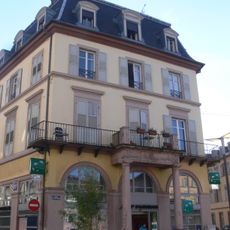
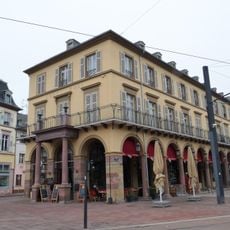
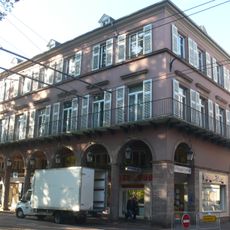
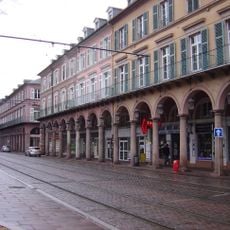
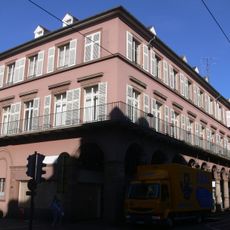
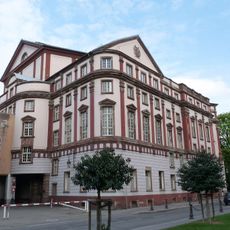
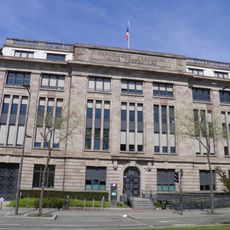
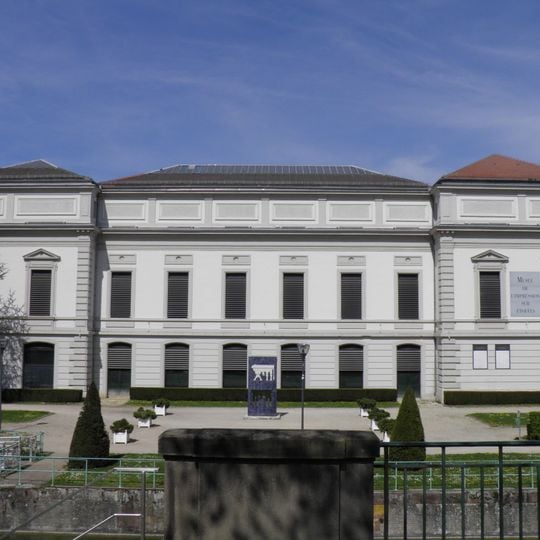
The Musée de l'impression sur étoffes occupies a pale-grey stone building with a dark hipped roof, built for the Société industrielle de Mulhouse by Swiss architect Frédéric-Louis de Rutté and inaugurated in May 1883. Its three floors trace printed textiles in order: block printing and 18th-century indiennes on the ground floor, copper-roller printing and 19th-century machines such as the 1809 Lefèvre roller machine, the 1832 Perrotine and an 1852 four-roller André Koechlin machine on the first, with 20th-century flat and rotary screen printing on the second.
The Musée de l'impression sur étoffes was created in 1955 as a local-law association, taking over collections assembled by the Société industrielle de Mulhouse, founded in 1826. It moved into a building designed by Swiss architect Frédéric-Louis de Rutté and inaugurated in May 1883, which had housed Mulhouse's fine arts museum until that closed after the war. Restructured between 1994 and 1996, it reopened on 21 March 1997.
The museum's name comes from the printed fabrics, called indiennes, that Mulhouse manufacturers traded across Europe from the late 18th century. The collection began with the Société industrielle de Mulhouse, founded in 1826, and its Musée de dessin industriel, created in 1857 to gather local and worldwide samples for professionals. Donations followed, including 586 samples of Sonia Delaunay's simultaneous fabrics before her death in 1979.
The museum occupies the building designed by Swiss architect Frédéric-Louis de Rutté for the Société industrielle de Mulhouse, inaugurated in May 1883. Its displays run over three levels: block printing and the 18th century on the ground floor, copper-roller printing and 19th-century machines such as the 1809 Lefèvre machine on the first floor. The second-floor section on 20th-century flat and rotary screen printing was left unfinished.
The collection includes thousands of patterns from different continents, showing how regional styles and trade routes shaped textile design across cultures. Many visitors overlook that some designs were directly inspired by artists from Asia, Africa, and the Middle East, revealing early forms of cultural exchange through commerce.
The community of curious travelers
AroundUs brings together thousands of curated places, local tips, and hidden gems, enriched daily by 92,899 contributors worldwide.