Mare à Goriaux, Biological reserve in Raismes, France
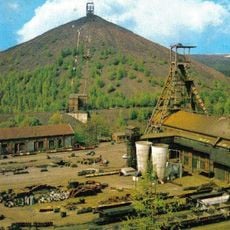
Mare à Goriaux is a 90-hectare mining subsidence lake, at most 1.3 metres deep, at the foot of a flat slag heap in the Raismes-Saint-Amand-Wallers state forest. Its open water, reed beds and wooded shoreline lie within a 270-hectare biological reserve managed by the Office National des Forêts.
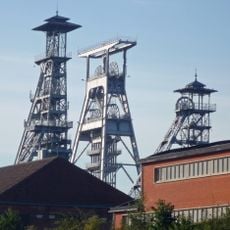
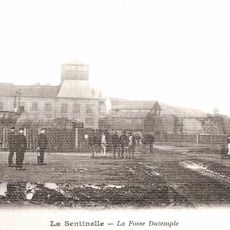
Mining subsidence above the Arenberg and Vicoigne pits began around 1916 and first created three pools, Bassy, Aubry and Goriaux. As they sank below the water table they grew and merged into a single lake around 1930, named after the patois word for pigs. A bird reserve was created in 1968, and in 1982 the site became a directed biological reserve; the ONF bought the slag heap in 1987.
The name comes from the Picard word goriot, meaning pig: the former mare à cochon was named for the pigs that once rooted here. The lake now draws birdwatchers, since nearly 300 bird species have been recorded, including the great crested grebe and the osprey. In winter it shelters thousands of ducks and serves as a migration stopover.
A 6.5 km waymarked footpath crosses the site and passes close to the Trouée d'Arenberg. The reserve lies in the Raismes-Saint-Amand-Wallers state forest, and the flat slag heap stretches about 2 km long by 20 to 30 m wide. From spring to autumn ticks can be numerous near the banks, so stay on the paths.
The flat slag heap beside the lake is 2 km long but only 20 to 30 m wide, a shape that marks the earliest phase of mining in the area. Unlike older heaps piled at pit shafts, this one was carried here by steam-powered transport. Silver birch was the first tree to take root on it.
The community of curious travelers
AroundUs brings together thousands of curated places, local tips, and hidden gems, enriched daily by 92,789 contributors worldwide.