Museum of Prehistory of Penmarch, Archaeological museum in Penmarch, France.
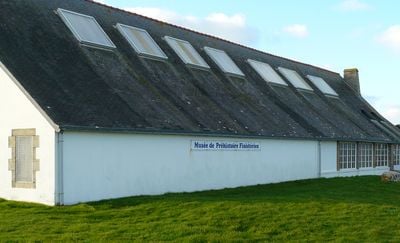
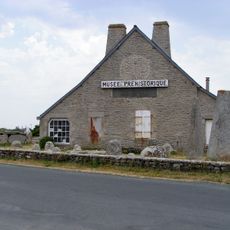
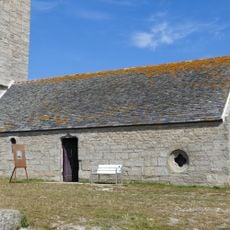
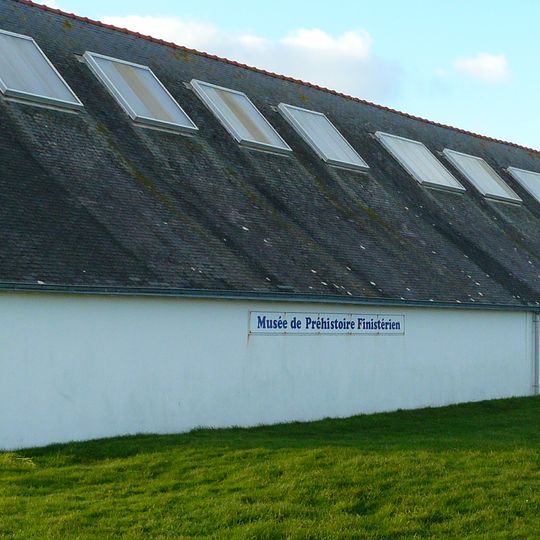
The Museum of Prehistory of Finistère occupies a long building with a steeply pitched roof of dark grey rectangular tiles and a plain white lower wall. Seven rectangular skylights with light frames are set into the left side of the roof in a row from lower left to upper right. Below the roofline, centered on the white wall, a rectangular sign with blue text on a white background reads "Musée de Préhistoire Finistérien". The building is bordered by grass.
The museum was founded by the Société civile du musée d'archéologie de Penmarc'h, whose statutes were deposited on 18 March 1922 under commander Charles Bénard le Pontois. The first room opened on 19 August 1923 in the presence of Louis Capitan, and the collections were classified as monuments historiques on 18 May 1925. In 1947 the museum was ceded to the University of Rennes and attached to Pierre-Roland Giot's laboratory.
The collections display stone tools, ceramics, and weapons that show how people in the Finistère region made and used objects across thousands of years.
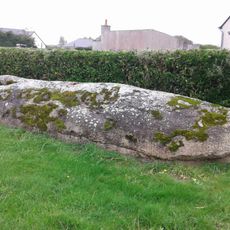
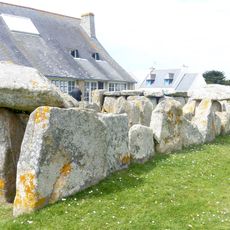
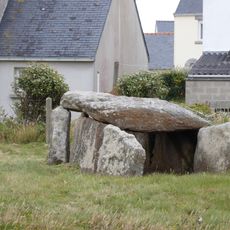
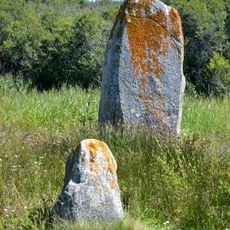
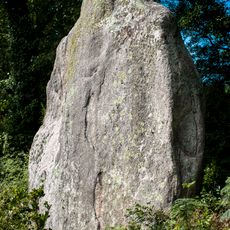
The museum stands at Pors Carn, outside Penmarch's centre, in a long white building with a steep grey tiled roof and seven skylights; the sign reads "Musée de Préhistoire Finistérien". It has been closed since early 2020 for non-compliance with public safety rules, so check its reopening before travelling. The outdoor monuments and stelae, including the Run-Aour covered alley, are displayed around the building.
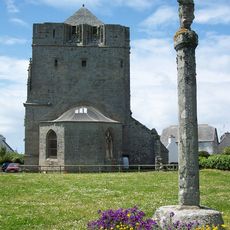
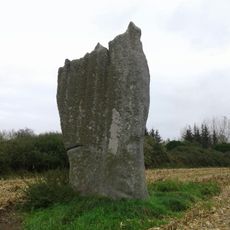
The museum closed at the start of 2020 because it no longer met safety rules for receiving the public, after still drawing about 6,000 visitors a year. Its archives are kept at the University of Rennes I. Outside stand Neolithic and Iron Age funerary monuments and stelae, among them the Run-Aour covered alley.
The community of curious travelers
AroundUs brings together thousands of curated places, local tips, and hidden gems, enriched daily by 94,117 contributors worldwide.