Dolmen de la pointe de la Torche, Megalithic dolmen in Plomeur, France
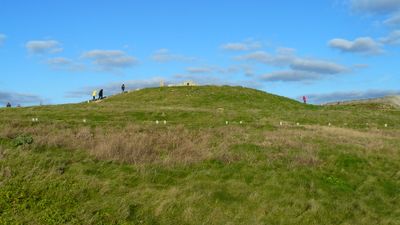
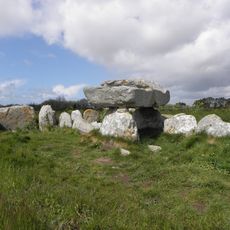
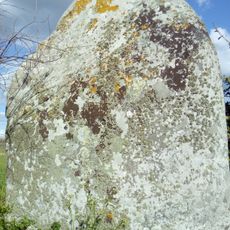
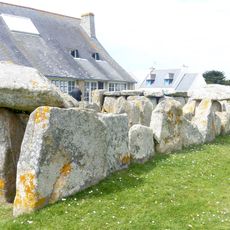
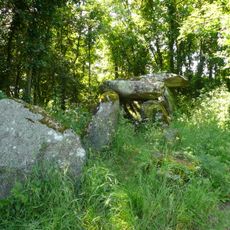
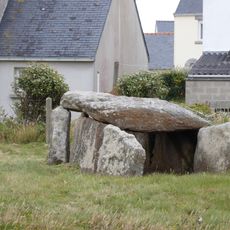
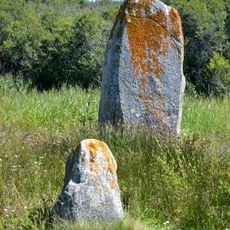
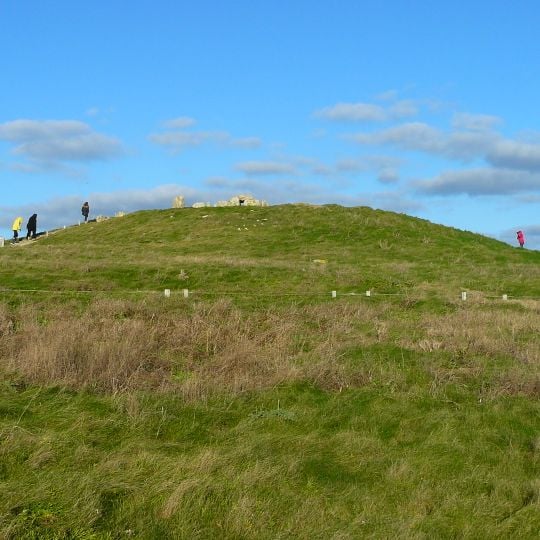
The dolmen de la pointe de la Torche is a megalithic burial structure made of large stone slabs positioned on a natural elevation above the Bay of Audierne. The site consists of a main chamber with a covered passage and is built upon a double stone cairn.
The mound was first excavated around 1881 by Paul du Chatellier, who found the summit already damaged by a coastguard observation post. In 1946 Pierre-Roland Giot identified two superimposed cairns holding a passage dolmen with side chambers and, on the eastern slope, a covered alley. Bones from the dolmen date to 4500–4090 BCE, preserved in calcareous sand.
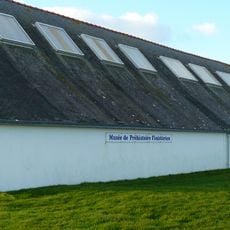
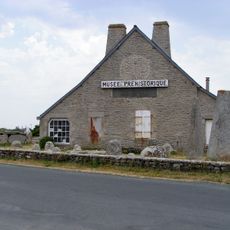
The Breton name Beg an Dorchenn means "point of the cushion", after the rounded back of the promontory; Jean-Marie Abgrall compared it to a colossal cushion. Cartographers mistranslated it as pointe de la Torche, while archaeologists keep the Breton name. The finds are displayed at the Musée de préhistoire finistérien in Pors Carn, Penmarc'h.
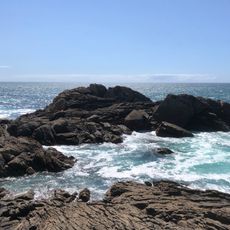
The site is accessible via coastal walking paths and features information panels about its history. The surroundings allow visitors to explore both the archaeological monument and the natural landscape in one visit.
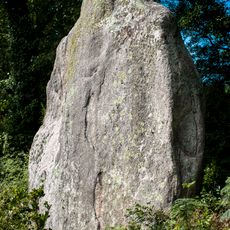
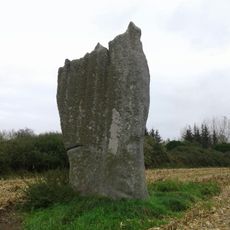
In 1919 Charles Bénard Le Pontois noted that the 600 to 700 menhirs once standing in four rows at Lestriguiou, 3 km away, pointed geometrically toward the summit of this tumulus. The site also holds a Mesolithic shell midden dated 5640 to 5550 BCE beneath the cairns.
The community of curious travelers
AroundUs brings together thousands of curated places, local tips, and hidden gems, enriched daily by 92,640 contributors worldwide.