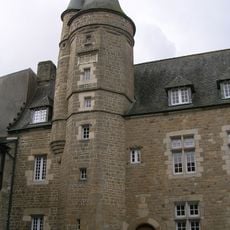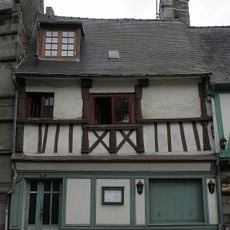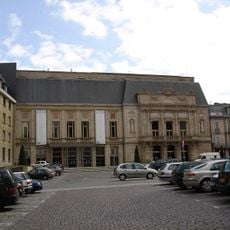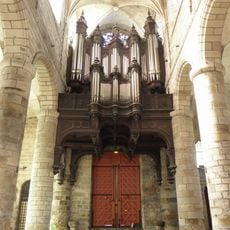
Musée d'art et d'histoire de Saint-Brieuc, Regional heritage museum in Saint-Brieuc, France
The Musée d'art et d'histoire de Saint-Brieuc is a regional museum spread across three floors within a building called Cour Francis Renaud in the city. The collections include maritime objects, agricultural tools, and extensive photography documenting how the region has changed over time.
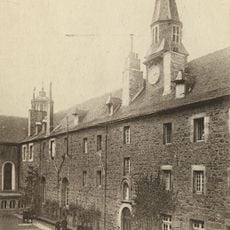
The museum grew out of Revolutionary confiscations: from 1789 the libraries of Saint-Brieuc's seminary and convents were gathered at the college, whose chapel stored the seized works. Under the Restoration natural history entered the collections through a commission chaired from 1831 to 1842 by the pharmacist François Ferrary. In 1983 a first building opened for temporary exhibitions, followed in 1986 by a second for the permanent collections.
The exhibitions show how Bretons lived with the sea and how flax was transformed into cloth through local craftsmanship. These traditions remain central to how the region sees itself today.
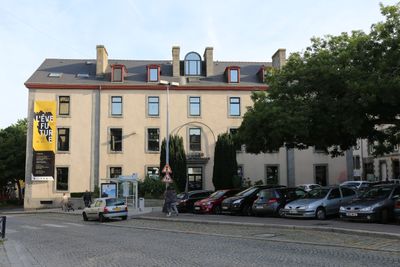
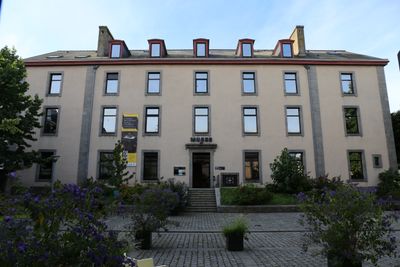
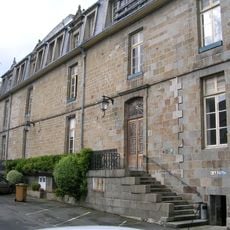
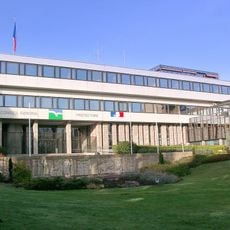
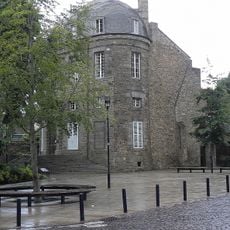
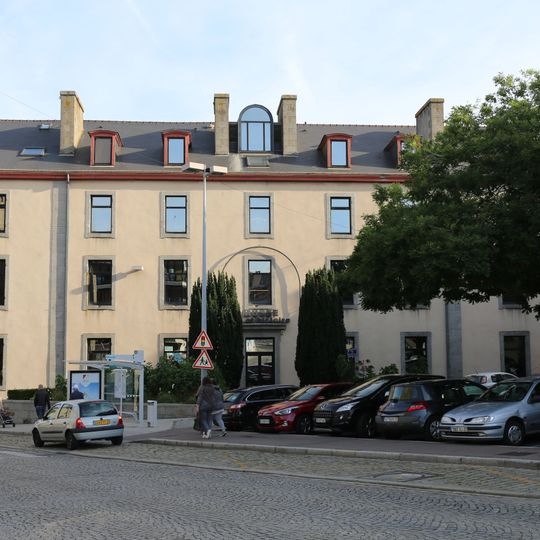
The museum occupies the former gendarmerie building, with a temporary-exhibition pavilion opened in 1983 and a permanent-collection gallery in 1986. The entrance, marked "MUSEE" in metal letters above glass doors, is reached by a short stone stair; a bus shelter stands in front of the facade. Two vertical banners hang left of the doors.
The museum holds the Lucien Bailly photographic collection of about 10,000 photographs and negatives, not 1,200. Bailly's images document daily life in the Saint-Brieuc area. The museum also keeps drawings by Mathurin Méheut and René-Yves Creston, and paintings inspired by life in Brittany, such as those by Alfred Guillou and Xavier de Langlais.
The community of curious travelers
AroundUs brings together thousands of curated places, local tips, and hidden gems, enriched daily by 94,113 contributors worldwide.