Palais de la Berbie, Episcopal palace and art museum in Albi, France
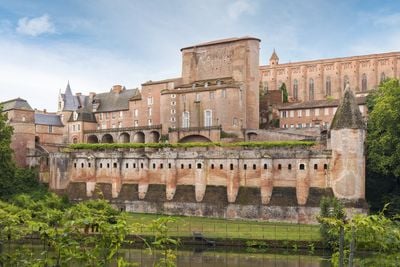
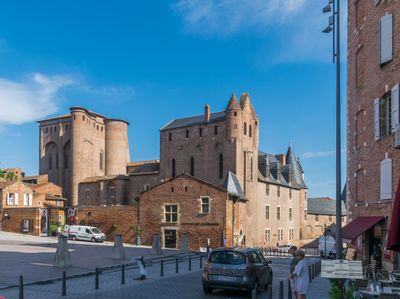
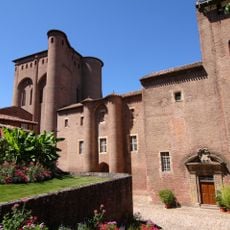
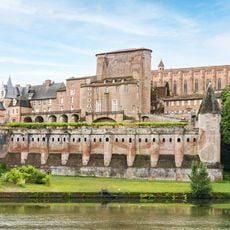
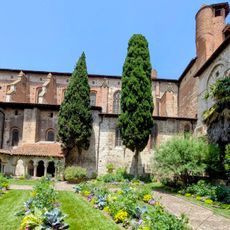
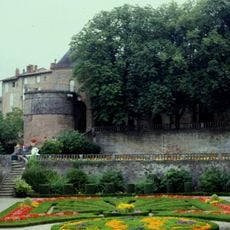
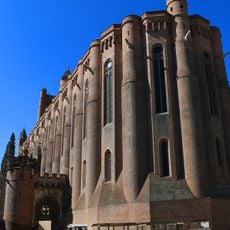
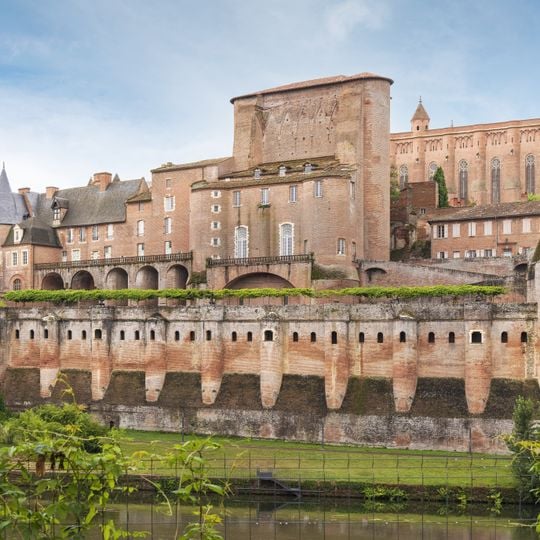
The Palais de la Berbie is a former bishops' palace in Albi, built of red brick above the left bank of the Tarn, immediately north of and below the Sainte-Cécile cathedral. Its lower section is a long fortified wall with tall buttresses and rows of small openings, topped by a planted terrace. Above rise a flat-topped tower with pointed blind arches, a lower wing with rectangular windows and a rounded archway, and a church-like building with tall pointed windows.
Construction began in 1228 under the bishops of Albi, who used the building as both a residence and a fortress during periods of religious conflict. Over the following centuries the walls and towers were gradually reinforced and extended.
The palace has housed the Musée Toulouse-Lautrec since 1924, after the building was seized under the 1905 law separating Churches and State. It holds the largest collection of works by Henri de Toulouse-Lautrec, who was born in Albi. The name Berbie comes from the Occitan bisbia, from Latin episcopia, meaning bishopric.
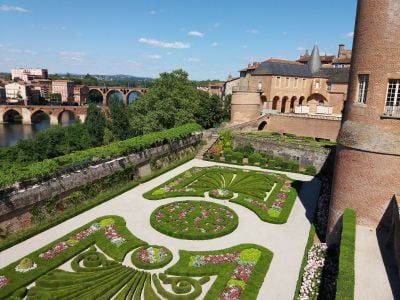
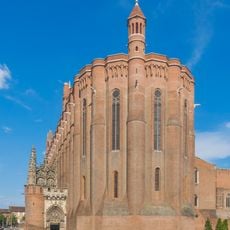
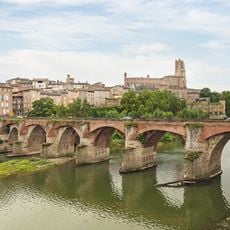
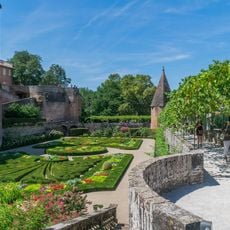
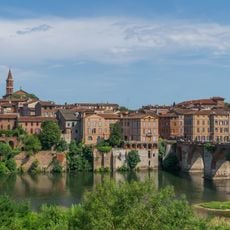
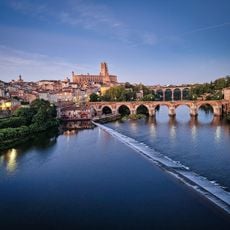
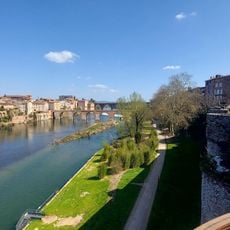
The palace stands on the left bank of the Tarn, immediately north of and below the Sainte-Cécile cathedral, between it and the river. Access to the gardens is free, and they are a walking spot with views over the right bank of the Tarn, its hanging gardens and the old medieval bridge. The museum rooms occupy the palace itself.
During excavations on the site, medieval pavement remains were found that changed how researchers understand the original layout of the fortress. These finds revealed construction phases that had not been visible from the building's surface.
The community of curious travelers
AroundUs brings together thousands of curated places, local tips, and hidden gems, enriched daily by 92,894 contributors worldwide.