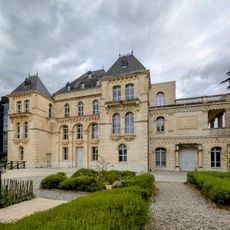
Baou de Saint-Marcel, Ancient fortified settlement in 11th arrondissement of Marseille, France
Baou de Saint-Marcel is a Celto-Ligurian oppidum on a plateau of Quaternary tuff above the Huveaune valley, over 167 m high and about 3 ha in area. Its north rampart is a 2.5 m thick curtain wall of irregular tuff blocks measuring roughly 0.6 by 0.5 m, built with an ovoid tower. Houses were single rooms of about 12 m2, their walls two faces of travertine rubble bound with clay.
The oppidum was founded in the first quarter of the 6th century BC and abandoned in the last quarter of the 2nd century BC. A first defensive wall went up around 575 BC, and the site was fortified until the late 4th century BC. After a reduced occupation, building and trade revived between 150 and the late 2nd century BC.
The site's name comes from the Provençal "baou", a rocky height. Excavations by Count Henry de Gérin-Ricard in 1930 and Paul Agostini from 1964 to 1972 yielded mostly hand-thrown pottery: urns, bowls and cups, alongside Attic black-gloss ware and later Campanian vessels. These finds trace trade from Greece and Etruria to Italy.
The site lies on a plateau of Quaternary tuffs above 167 m, reached from the Saint-Marcel district of Marseille's 11th arrondissement, about seven kilometres from the Vieux-Port. The western side is a steep rock cliff; the other slopes are gentle. The wall and the archaeological soils around it have been inscribed as monuments historiques since 23 August 1990, so stay on the paths and leave stones and sherds in place.
The settlement was not continuously occupied but was abandoned and reoccupied multiple times during ancient periods. This pattern of rise and fall reflects broader shifts in the region's fortunes.
The community of curious travelers
AroundUs brings together thousands of curated places, local tips, and hidden gems, enriched daily by 92,794 contributors worldwide.