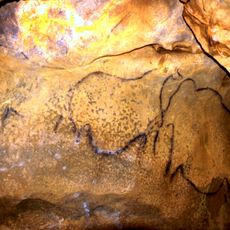
Oratoire de Saint-Céneré, 19th-century oratory and chapel in Saulges, France
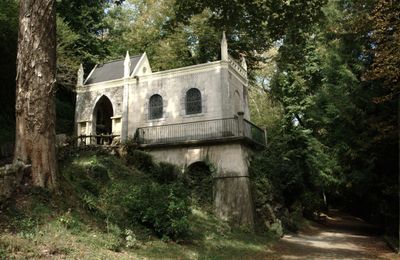
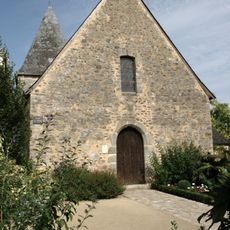
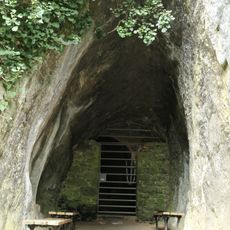
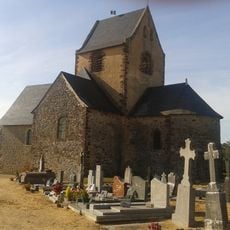
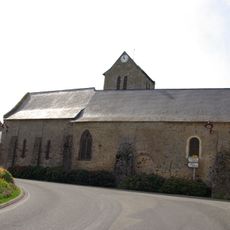
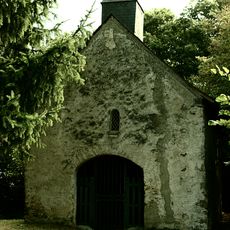
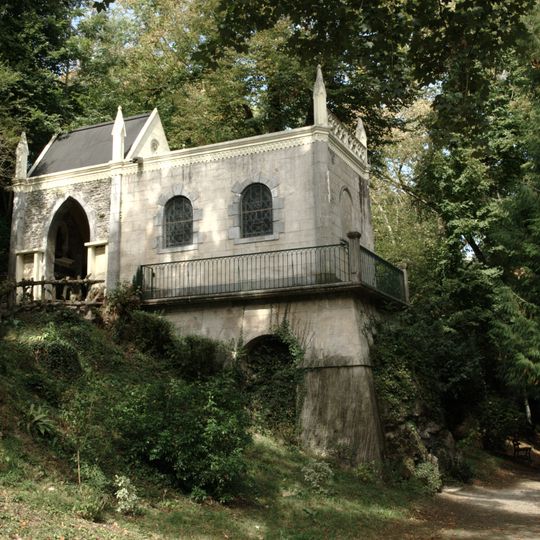
The Oratoire de Saint-Céneré is a chapel of pale stone built in 1849 against the slope at Montguyon, 1 km from Saulges, above the grotto of Céneré's hermitage. Its gable front has a pointed-arch opening with a wooden gate, two round-arched leaded windows, a small spire and a pinnacle at the corner. Inside, a painting attributed to Adeline Neveu shows Céneré healing the blind and the paralyzed, and four late-19th-century stained-glass windows came from the dismantled Plessis chapel.
The chapel was built in 1849 by the Marquis de la Rochelambert as a replacement for an earlier wooden structure that had sheltered a revered statue. This construction marked the site's growing importance as a place of pilgrimage.
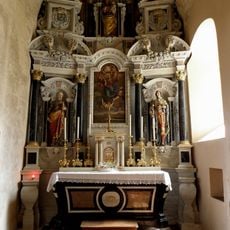
Residents of Maine and Anjou have come to Saulges around 15 August for thirteen centuries to honour their patron, and the pilgrimage continues today. The chapel holds a painting attributed to Adeline Neveu showing Céneré healing the blind and the paralysed, and four late-19th-century windows from the dismantled Plessis chapel depicting the Sacred Heart, the Virgin, Saint Joseph and Saint Alexander.
The oratory stands at the Montguyon hamlet, 1 km from Saulges bourg, on the bank of the Erve. Two side ramps against the hillside lead up to the chapel, which opens on three sides; the nave added in 1933 has a roof terrace. The dates 1849 and 1903 are carved on the gable.
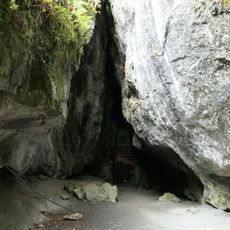
The 18th-century polychrome wooden statue of Saint Cénéré, restored in 2005, stands in the grotto above the spring. Because the water never stops flowing, the saint is nicknamed "the little pissing saint"; Grosse Dupéron wrote that whoever has not seen the spring cannot understand it.
The community of curious travelers
AroundUs brings together thousands of curated places, local tips, and hidden gems, enriched daily by 93,841 contributors worldwide.