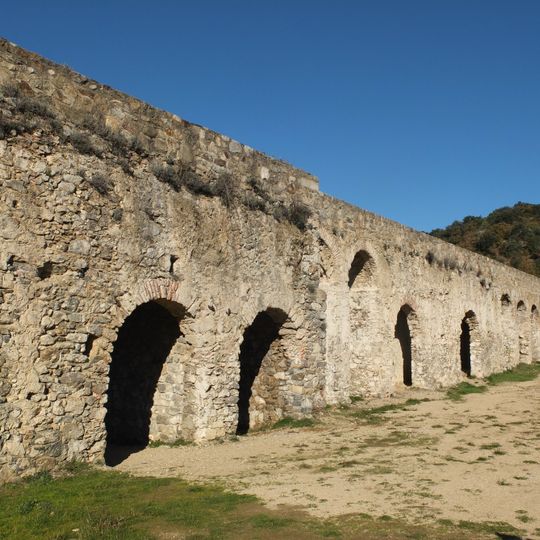
Ansignan aqueduct, Roman aqueduct in Ansignan, France
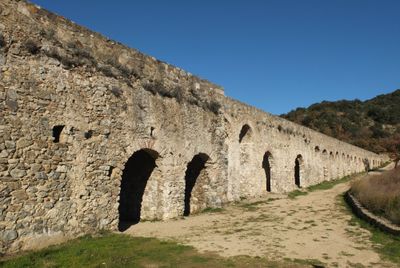
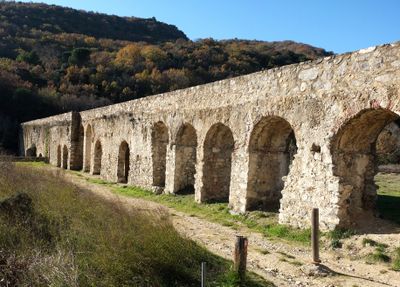
The Ansignan aqueduct is a stone bridge spanning the Agly valley with nearly 30 arches stretching for 170 meters. It rises about 15 meters above the landscape and was built from crushed stone and mortar to carry water across significant distances.
The structure was built in the 3rd century during the Roman period to bring water to settlements further away. In later periods it was modified by Carolingian and medieval peoples, but maintained its basic function as a water transport route.
The structure takes its name from the nearby village and is viewed today as a symbol of Roman engineering mastery. Visitors use the site to photograph the impressive spans and learn about how ancient people solved water transport challenges.
The site is freely accessible and you can view the structure from below and at various angles. Wear shoes with good grip since the ground is uneven and can become slippery in wet conditions.
This is the only still-working rural Roman-era aqueduct in Europe and continues to supply water to fields across roughly 4 kilometers. This means it has been doing essentially the same job for almost 2000 years as originally intended.
The community of curious travelers
AroundUs brings together thousands of curated places, local tips, and hidden gems, enriched daily by 90,885 contributors worldwide.