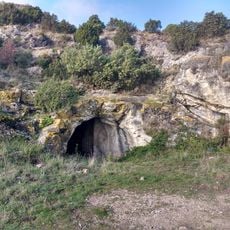
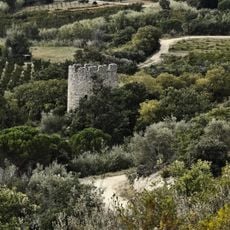
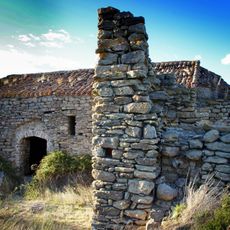
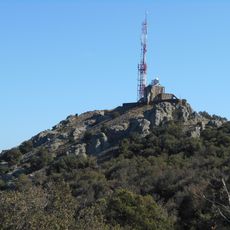
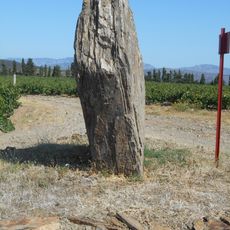
Dolmen du Molí del Vent, Neolithic dolmen in Bélesta, France.
Dolmen du Molí del Vent is a Neolithic burial monument in Bélesta with a chamber accessed through a narrow corridor of dry stacked stones. The structure has a roughly circular shape and measures about 9 meters across.
This dolmen was built in the late Neolithic period and was used as a burial site over many generations. Archaeological findings show that the site was revisited and used by people across different time periods.
The name Molí del Vent means "windmill", though no mill stands here; the dolmen was long known locally and served as a stone quarry in historical times. It was first reported in 1963 by François Roig, explored by G. Claustre and P. Ponsich in 1964, and fully excavated in 1993 by a team led by V. Porra-Kuteni before restoration. Finds are kept at the château de Bélesta museum.
The dolmen stands on a hill north of Bélesta, not near Cassagnes. The site is reached on foot; the low cairn wall, at most 0.50 m high, and the open southeast end of the passage are easy to miss among the foliage. Sturdy shoes help on the dirt path between the two low dry-stone walls.
The entrance corridor gradually narrows as it leads deeper toward the central chamber, creating an unexpected spatial effect. This tapering was likely intentional and hints at the builders' careful planning of the interior layout.
The community of curious travelers
AroundUs brings together thousands of curated places, local tips, and hidden gems, enriched daily by 94,230 contributors worldwide.