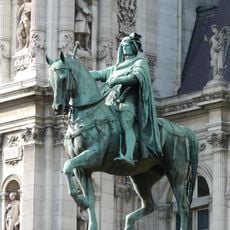
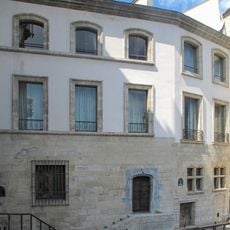
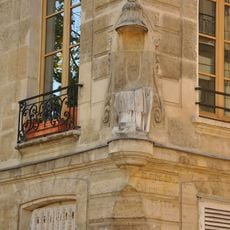
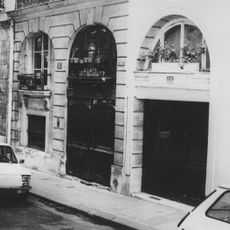
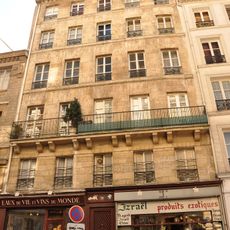
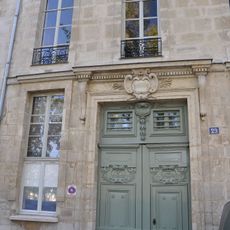
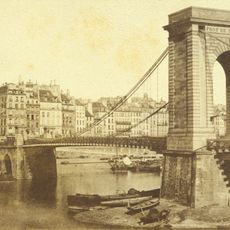
Quai de l'Hôtel-de-Ville, Riverfront promenade in 4th arrondissement, France.
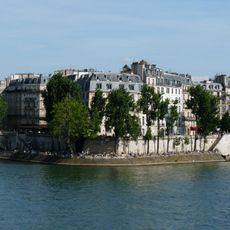
Quai de l'Hôtel-de-Ville is a roughly 535-meter-long waterfront path along the Seine with a width of about 32 meters. The walkway is lined by historic buildings and forms a continuous promenade in the 4th arrondissement.
In 1254 the bank was a path called vicus Merrenarum, the timber merchants' road. From the 15th century it was the quai de la Grève, a gravel shore before paving. A ministerial decision signed by Chaptal on 26 September 1797 set its alignment; royal ordinances of 4 and 27 September 1836 fixed the width at 24.30 metres, and the parapet wall was built in 1837-1839. The present quai was created in 1867-1868 by merging parts of the quai des Ormes and the quai de Grève.
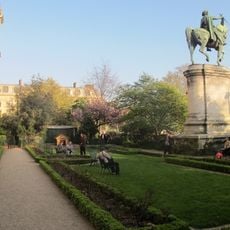
The name comes from the Hôtel de Ville it runs alongside. In the Middle Ages, fires for Saint John were lit on the square, as a Histoire de Paris panel at the corner recalls. Today the quai borders the Jardin des Combattants-de-la-Nueve, named for the Spanish Republican unit that entered Paris in 1944.
Access is available via Metro line 7 at Pont Marie station and lines 1 and 11 at Hôtel-de-Ville station near the waterfront path. The walkway itself is flat and straightforward, with no steep sections or major obstacles to navigate.
Water level marks from past Seine floods remain visible on a building facade from 1817, recording the height of historical inundations. These marks silently document the river's power and the flood events that shaped the area over centuries.
The community of curious travelers
AroundUs brings together thousands of curated places, local tips, and hidden gems, enriched daily by 93,006 contributors worldwide.