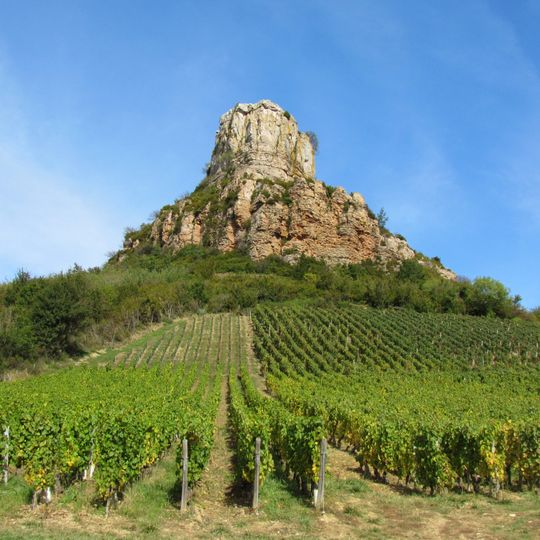
Rock of Solutré, Limestone summit in Saône-et-Loire, France
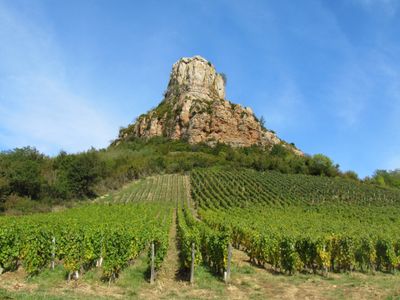
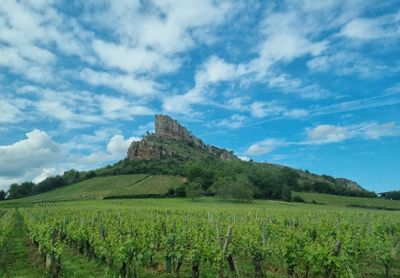
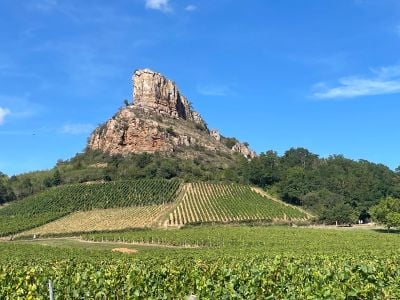
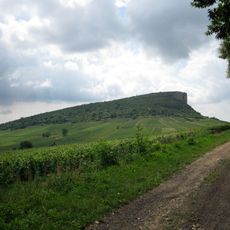
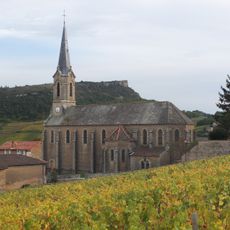
Rock of Solutré is a limestone outcrop in the Mâconnais wine region of Saône-et-Loire, rising sharply above the surrounding plain just west of Mâcon. Its western face drops in near-vertical cliffs while the eastern slope descends more gradually toward the vineyards below.
People hunted at this spot roughly 55,000 years ago, leaving behind flint tools and animal bones that built up in deep layers over thousands of years. Organized excavations began in 1866, uncovering one of the richest prehistoric deposits in western Europe.
The rock has given its name to a whole prehistoric culture found across Europe, known to researchers as the Solutrean. Visitors walking the path can still see the layered stone faces that made this place a natural landmark for people moving through the region long ago.
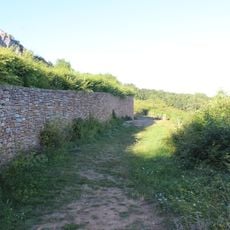
A marked trail leads to the top and is manageable for most visitors, though the final section becomes steeper and requires sturdy footwear. At the base, a prehistory museum helps make sense of what was found on site, so visiting it either before or after the climb adds useful context.
For a long time, it was believed that hunters drove herds of horses off the cliff edge here, but this theory has since been abandoned. The bones found on site accumulated gradually from hunting over many generations, not from a single dramatic event.
The community of curious travelers
AroundUs brings together thousands of curated places, local tips, and hidden gems, enriched daily by 60,000 contributors worldwide.